
Curonian Lagoon, Lithuania
The Curonian Lagoon is the large lagoon between mainland Lithuania and the Curonian Spit. The spit is the long strip of sand that separates the lagoon from the open Baltic Sea; the two landscapes lie close together, but they are not the same destination. In the north, the lagoon opens into the Baltic Sea at Klaipėda, while the Nemunas Delta shapes the shoreline in the south. This overview will help you choose shorelines, places and activities for a stay by the water.
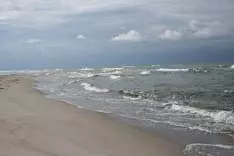 Litauen Kurisches Haff
Photo: bez_zatej/www.flickr.com
Litauen Kurisches Haff
Photo: bez_zatej/www.flickr.com
Quick facts
- The Curonian Lagoon, Kuršių marios in Lithuanian, is a lagoon between the mainland and the Curonian Spit.
- The Curonian Spit is land; it separates the lagoon from the Baltic Sea and is itself a UNESCO-listed cultural landscape.
- The lagoon’s northern passage to the Baltic Sea is at the Klaipėda Strait.
- The Nemunas carries fresh water into the lagoon; in the north, water from the Baltic Sea also affects salinity.
- Places in Neringa, including Nida, lie on the western shore; the Nemunas Delta and Ventė are on the mainland side.
- The Parnidis Dune near Nida offers views of the lagoon, the Baltic Sea and the settlement; follow paths and local protection rules.
- Wind, weather, travel arrangements and your chosen stretch of shoreline all influence whether a day is best suited to the beach, scenic views, birdwatching or a boat trip.
Distinguishing the lagoon from the spit
On a map, the Curonian Spit looks like a narrow strip of land stretching south from Klaipėda to the Kaliningrad region. The lagoon lies to its east, and the open Baltic Sea to its west. In everyday speech, both bodies of water are easily subsumed under the collective term “Curonian Spit.” For planning purposes, it is worth distinguishing between them: a beach walk by the Baltic Sea, a shoreline path along the lagoon and a trip on the lagoon offer different views and conditions.
At its northern end, the lagoon connects to the Baltic Sea via the Klaipėda Strait. The water is therefore not entirely separate from the marine environment. Measurement data describe salinity in the northern part as a result of the interplay between Nemunas outflow and Baltic Sea water. When choosing accommodation, a spot on the shore or a boat trip, check the exact location on the map rather than relying only on the word “lagoon” in a place or hotel description. Klaipėda is a starting point for visiting the port city and the northern passage; for a comparison with the open coast, see Baltic Sea holidays in Lithuania.
UNESCO designations should also be understood precisely: the World Heritage Site is the cultural landscape of the spit, not every stretch of the lagoon’s waters. The peninsula preserves villages, dunes and traces of human use of the landscape. If you want to experience both in one day, plan your travel and walking routes to leave enough time for each stretch of shoreline.
Places on the lagoon and the Curonian Spit
On the Lithuanian part of the spit, Neringa connects several settlements, each with its own character. Nida is a well-known base in the south; Juodkrantė, Preila and Pervalka are also on the peninsula. The best place to stay depends on whether you are planning short walks, longer nature trails, museums or excursions on both sides of the spit. The page Neringa and its settlements helps you compare the settlements, while the overview of the Curonian Spit focuses on the landscape and visitor rules.
In Nida, you can visit both the lagoon side and the Baltic Sea side without confusing the two. Parnidis Dune is a distinctive viewpoint; Lithuania’s official tourism information describes the view from there as taking in shifting sand dunes, the Baltic Sea, the Curonian Lagoon and the houses of Nida. Since the dunes are fragile, stay on permitted paths and follow signs and current guidance from the protected-area authorities. For a general introduction to protected areas and nature destinations, see the overview of national parks in Lithuania.
“Neringa” refers to the municipality on the Lithuanian section of the spit, while “Curonian Spit” means the entire landform. The lagoon, meanwhile, is the body of water to its east. This distinction also makes it easier to search for accommodation: check whether an address is in Nida, another settlement on the spit or on the mainland, and which shore you can actually reach from there.
The Nemunas Delta and birdwatching
At the southeastern end of the lagoon, the Nemunas branches out into a delta. River channels, wetlands, meadows and islands form a landscape quite different from the forested spit. The protected-area administration describes the delta as an important section of a bird migration route. At Cape Ventė, nature lovers can combine birdwatching with a visit to the water; Lithuania’s official tourism information also mentions the lighthouse there as a viewpoint overlooking the lagoon.
Before setting out, first confirm your starting point and return journey. Ventė is on the mainland side; Nida is on the spit. A boat trip can connect the two shores and include stops along the way, but departure points, schedules and weather conditions vary. Check directly with the operator to confirm that the trip you want is running on your planned date and how the return journey is arranged. For a broader look at the river, the page on the Nemunas offers additional travel ideas.
Binoculars, weatherproof clothing and plenty of time for observation are usually more useful in the delta than a tightly packed day plan. Bird sightings depend on the season and conditions; there is no guarantee that you will see a particular species. Stay on permitted paths and respect quiet zones, signs and instructions from the local authorities.
Exploring by water or along the shore
The lagoon is well suited to peaceful nature watching as well as water-based activities. If you plan to sail or use a boat, confirm the exact departure point, permitted areas, weather-related decisions and return arrangements in advance. The overview of sailing holidays in Lithuania is a useful starting point, but it does not replace checking current conditions or confirming details with an operator. For longer stays near the water, you can also look for suitable camping options in Lithuania and check the location, season and facilities directly with the campsite.
If you prefer to explore on foot, you can combine individual shoreline settlements and viewpoints. Bear in mind that paths by the lagoon do not necessarily run along the water, and that the distance between the lagoon and sea sides of the spit varies considerably from place to place. A map showing the specific access points is more useful than a general claim that somewhere is “near the lagoon.”
Practical planning for a visit
Wind direction, rain and waves can change the experience along the shore, so have an alternative in a town or inland in case of unsettled weather. Before longer journeys, also check where you can park, how you will get to the next leg of your trip and whether your accommodation can store your luggage. Specific schedules, prices, tour availability and opening hours can change, so no general details are given here.
Protected areas have rules and guidance on access, parking and conduct in sensitive natural environments. Check the latest information from the national or regional park administration in advance, especially if you plan to visit dunes, wetlands, birdwatching sites or waterways. The presence of a visible path, landing place or open stretch of shore does not automatically mean that every use is permitted there.
The lagoon is not a single viewpoint but a transition zone between river, lagoon, peninsula and Baltic Sea. If you choose a focus before you arrive—Nida and the spit, Klaipėda and the northern passage, or Ventė and the delta—your day will be easier to plan and it will be simpler to choose the right stretch of shore.
Frequently asked questions
Is the Curonian Lagoon the same as the Curonian Spit?
No. The lagoon is the body of water; the spit is the long, sandy peninsula that separates the lagoon from the open Baltic Sea. They are close together, but have different shores and destinations for excursions.
Where does the lagoon meet the Baltic Sea?
In the north, near Klaipėda, the Klaipėda Strait connects the lagoon to the Baltic Sea. Further south, the lagoon and the sea lie on opposite sides of the Curonian Spit.
What can I experience by the lagoon in Nida?
You can combine the lagoon shore, the dune landscape and the Baltic Sea side in one stay. Parnidis Dune is a viewpoint overlooking the lagoon, the sea and Nida; follow marked paths and observe local protection rules.
Where can I watch the lagoon’s birdlife?
The Nemunas Delta and Cape Ventė are well-known destinations for nature watching and birdwatching. Sightings depend on the season and weather; do not count on seeing a particular species, and check local access rules.
Can I explore the lagoon by boat?
Boat trips and sailing excursions depend on the departure point, operator, weather and current conditions. Contact the operator directly to check whether the trip is running, its route and the return arrangements, and use only permitted landing places.
