
Zeppelins
Cepelinai, often called “Zeppelins” in English, are hearty Lithuanian potato dumplings with a savoury filling. Their name evokes airships, whose elongated shape the dumplings resemble. Find out what makes them distinctive, how the potato dough and filling come together, and what to keep in mind when cooking or ordering them.
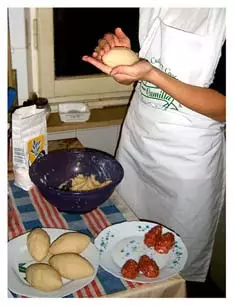 Zeppeline
Quick facts
- Lithuanian name: Cepelinai is the dish’s common name; “Zeppelins” refers to its elongated, airship-like shape.
- Main ingredient: The dough is made from raw grated potatoes and, depending on the recipe, may also include cooked, mashed potatoes.
- Fillings: Common options include seasoned minced meat, dry curd cheese or mushrooms.
- Typical accompaniments: They go well with a sour cream sauce and crispy bacon bits; dill and fried onions are also used in many recipes.
- Preparation time and effort: A recipe from the Balzekas Museum of Lithuanian Culture serves eight, is rated challenging and takes about three and a half hours.
- Dough ratio: This museum recipe uses approximately 80% raw potatoes and 20% cooked potatoes; other recipes may differ.
- Serving size: Cepelinai are rich and filling. Take the filling and accompaniments into account when ordering or planning a menu.
What are cepelinai?
The dish is made from a potato mixture wrapped around a filling, forming an elongated dumpling with slightly pointed ends. As the dumplings cook in water, the potato starch and a well-sealed seam keep the filling inside. The result is not an ordinary potato dumpling served as a side, but a substantial main course in its own right.
Lithuania Travel, the country’s official tourism information service, describes cepelinai as Lithuania’s national dish and explains that the name comes from their resemblance to Zeppelin airships. It lists grated and cooked potatoes as the base, with minced meat, dry curd cheese or mushrooms as possible fillings. Shapes and accompaniments vary from recipe to recipe, so a restaurant dish is not necessarily the same as a family version.
The familiar English name “Zeppelins” is a descriptive adaptation of the name, not a literal translation of dumplings or filled pasta. If you’re trying the dish for the first time, pay particular attention to the potato casing, filling and sauce. An overview of Lithuanian cuisine shows how cepelinai fit alongside other regional dishes.
The potato dough: grated, cooked and well drained
Many recipes combine raw potatoes with a smaller proportion of cooked, mashed potatoes. The raw potatoes are finely grated, then excess liquid is squeezed out so the dough can be shaped. In one museum recipe, the liquid is left to stand briefly, then poured off, and the potato starch that has settled at the bottom is mixed back into the potato mixture. Together with the cooked potatoes, it helps bind the dough.
For its recipe, the Balzekas Museum of Lithuanian Culture specifies a ratio of approximately four parts raw potatoes to one part cooked potatoes. This is a guide from a particular recipe, not a universal rule. Potato varieties differ in their starch and moisture content, so the consistency and amount of additional starch needed depend on the potatoes used and how thoroughly they are drained.
Shape a small test dumpling first. If the mixture is too soft or falls apart in your hands, it needs more binding and the liquid needs to drain further. If it is dry and crumbly, it will be harder to seal. If you’re making cepelinai for the first time, follow a tested recipe and don’t scale the quantities by guesswork alone.
Prepare the filling and seal the dumplings
For the classic savoury version, minced meat is mixed with onion and seasoning. Lithuania Travel lists dry curd cheese and mushrooms as meat-free alternatives. A museum recipe also adds egg and herbs to its curd cheese filling, but ingredients and seasoning vary. If ordering a vegetarian version, ask whether the sauce and toppings are meat-free too.
To shape the dumplings, flatten some of the potato mixture, place the filling in the centre and fold the dough around it. Press the seam together carefully and smooth any cracks with lightly moistened hands. A poorly sealed edge may open in the pot. Keep the filling compact and leave enough dough around it so the casing doesn’t split during cooking.
Cook and serve
Cook the dumplings in a pot large enough that they aren’t crowded. In a Balzekas Museum recipe, they are left to simmer gently for another 30 minutes after rising to the surface, then rest in the hot water for ten minutes. This is the method for one specific recipe, not a fixed cooking time for every size or pot. Follow a tested recipe and make sure any meat filling is thoroughly cooked.
Cepelinai are often served with sour cream sauce and bacon bits. Fried onions and dill also go well with them. For a meat-free version, choose a curd cheese or mushroom filling and serve it with sauce and toppings that contain no meat. As the dish is rich, many diners find that a small number of dumplings with a simple side is enough.
The work starts long before the pot: grating the potatoes, squeezing out the liquid, mixing the dough, preparing the filling and carefully sealing each dumpling all take patience. The museum recipe mentioned above allows about three and a half hours in total for eight servings and rates the preparation as challenging. Plan your steps and choose a suitably sized pot before you begin.
Photo: ©renatela/www.flickr.com
Try cepelinai in Lithuania
Look for “cepelinai” on menus and ask about the filling and accompaniments. The guide to restaurants and cafés in Lithuania can help with your plans. If you’re looking for food or other shelf-stable specialities to take home, find ideas among souvenirs from Lithuania.
You can combine a food-focused visit with sightseeing. For a stay in the capital, the overview of Vilnius offers useful orientation, along with things to see in Vilnius. Kaunas is another worthwhile stop, with its own history and architecture; start with things to see in Kaunas.
Festivals can offer additional opportunities to try Lithuanian food, but stalls and programmes change from year to year. Check the latest information about Kaziuko mugė in Vilnius and other festivals and events in Lithuania rather than assuming that a market will have the same offerings as in previous years. If you’re interested in the history of everyday culture, you can also add museums in Lithuania to your visit.
FAQ
Why are cepelinai also called Zeppelins in English?
Their elongated shape is reminiscent of Zeppelin airships. Lithuania Travel gives this resemblance as the explanation for the dish’s name.
What fillings are typical?
Common fillings include minced meat, dry curd cheese and mushrooms. Recipes vary; for a meat-free version, check the sauce and toppings too.
What goes into the potato dough?
The base is made from grated raw potatoes. Some recipes also mix in cooked, mashed potatoes and the starch extracted from the grated mixture.
How long should cepelinai be cooked?
Cooking time depends on the dumplings’ size, dough and filling. The Balzekas Museum recipe recommends about 30 minutes at a gentle simmer after they rise to the surface, followed by ten minutes resting in the hot water.
Are cepelinai vegetarian?
They can be filled with dry curd cheese or mushrooms. Make sure the sauce, bacon and other accompaniments also suit your dietary requirements.
