
Discover Lithuanian Cuisine: Dishes, Products and Regional Tips
Lithuanian cuisine combines potato dishes, dark rye bread, dairy products and seasonal ingredients with recipes from different regions. When travelling, it is worth asking about regional specialities, small bakeries and seasonal offerings as well as well-known classics. This overview explains what you might find on the menu and what guests should bear in mind when choosing dishes, checking ingredients and planning their trip.
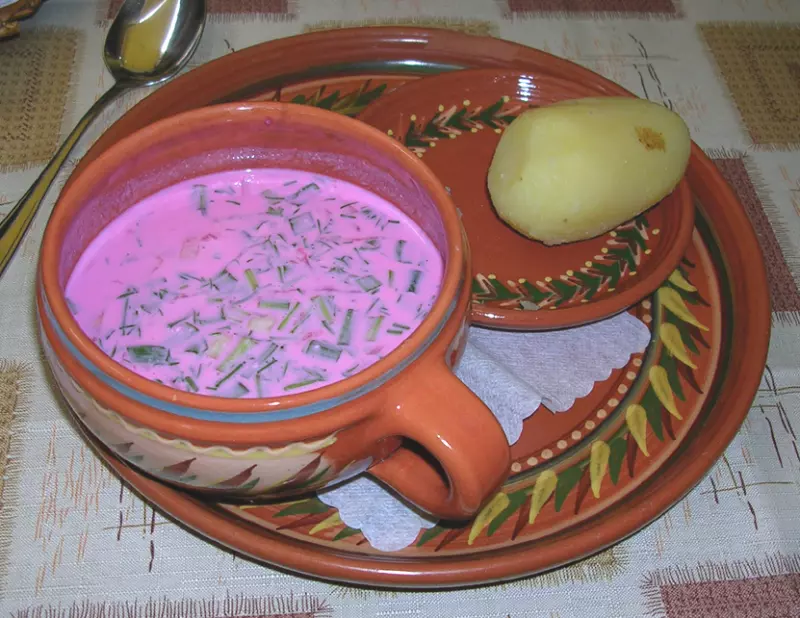 Borscht, eines der Nationalgerichte in Litauen
Photo: TreasuryTag / Wikipedia.de, CC BY-SA 3.0
Borscht, eines der Nationalgerichte in Litauen
Photo: TreasuryTag / Wikipedia.de, CC BY-SA 3.0
Lithuanian cuisine at a glance
- Hearty and filling: Cepelinai, potato dishes and robust rye bread are well-known classics.
- Typical cepelinai fillings: The potato dumplings may be filled with meat, curd cheese or mushrooms; they are often served with sour cream sauce and bacon.
- Cold soup: Šaltibarščiai is typically made with beetroot and kefir; cucumber, herbs and egg are common ingredients.
- Good edible souvenirs: Rye bread, honey, apple cheese and curd cheese are among the products highlighted by Lithuania Travel.
- Regional specialities: The official culinary map lists, for example, kibinai for Trakai and Čičinskas steak for Panevėžys.
- Consider the season: Šaltibarščiai is served cold and is particularly well known as a summer dish.
- If you have food intolerances: Fillings, sauces and side dishes vary from one kitchen to another; ask about the ingredients directly before ordering.
Ordering cepelinai and other potato dishes
Cepelinai are large, filled potato dumplings. Their casing is made with a combination of grated and cooked potatoes. According to Lithuania Travel, the filling varies and may consist of minced meat, dry curd cheese or mushrooms. The dumplings are often served with sour cream sauce and bacon. They are a substantial dish: if you want to try several things, you can share a portion or start with a smaller appetiser. Preparation and portion sizes vary from restaurant to restaurant.
Take a close look at the filling and sauce on the menu. Don’t assume a dish is vegetarian just because its filling is described as such: bacon may be added as a topping, and broth or sauce may contain other animal-derived ingredients. If needed, ask for it to be prepared without meat and whether the side dish can be ordered separately. If you are looking for a selection of traditional food, you could first compare menus in Vilnius and Kaunas; check current opening hours and offerings directly with the restaurant.
Potato bakes and pancakes are also common in many regional cuisines. Names and recipes differ, so it is more useful to ask than to assume a dish is prepared the same way everywhere. If you would like to include a classic in a sightseeing trip, Trakai is a good opportunity to ask about kibinai: the national tourism website lists these filled pastries as a local speciality. The same culinary map names Čičinskas steak in Panevėžys. Before setting out, check which restaurants actually serve the speciality in question.
Šaltibarščiai: brightly coloured cold soup
Šaltibarščiai immediately stands out for its pink colour. The cold soup is made with beetroot and kefir; depending on the recipe, it may also include cucumber, dill, spring onions and hard-boiled egg. Lithuania Travel describes it as a summer classic. Side dishes and garnishes often vary by recipe and restaurant. If you are ordering it for the first time, ask about the ingredients and accompaniments, and choose the soup as a lighter meal or as part of a larger tasting.
The colour doesn’t tell you much about how spicy it is: the flavour is usually fresh and tangy, but can vary depending on the kefir, herbs and seasoning. Since it contains dairy products, Šaltibarščiai is not suitable for people with a milk allergy; if you have other dietary concerns, ask the staff to confirm the exact recipe. A multi-course meal doesn’t have to be complicated: share a soup, try some bread or cheese afterwards, and order a main course only if you still have room.
Rye bread, cheese and sweet specialities
Dark rye bread is an easy way to discover Lithuanian produce. It is served as an accompaniment or a light snack and goes well with cheese, honey or fresh ingredients. Lithuania Travel also highlights apple cheese and curd cheese. These products differ from familiar German varieties; when buying them, check the ingredients and packaging, and ask whether they need to be kept refrigerated.
For an edible souvenir, well-packaged products with a long shelf life are usually more practical than fresh food. Honey and packaged sweets are easier to transport; cheese and other chilled products need suitable storage. Also check the import and food regulations that apply in your destination country before bringing animal products with you. For ideas beyond food, see our overview of souvenirs from Lithuania.
If you would like to try desserts, ask about regional baked goods rather than ordering only a standard international dessert. Lithuania Travel lists šakotis as a well-known baked treat; however, local choices and availability may vary by location, season and establishment. In Klaipėda, Neringa or Palanga, you can include a restaurant visit as part of a coastal stop and decide based on the current menu when you get there, without assuming any particular speciality will be available.
Adding regional cuisine to your itinerary
Lithuanian dishes aren’t confined to a single capital-city menu. The national tourism website, together with local tourism offices, has created a culinary map of regional dishes. It connects well-known foods with towns and regions, making it a useful starting point for a culinary detour. It doesn’t guarantee that every dish will be available at every restaurant at all times: call ahead or check the menu on the day of your trip.
A practical route can combine short tastings with sightseeing. Set aside time for a snack in Trakai, compare several up-to-date menus in Vilnius, and use a stop in Kaunas to sample something else. For a more leisurely stay, combine restaurant visits with a spa-town visit to Birštonas or Druskininkai. These are planning ideas, not recommendations for any particular restaurant; check closing days, seasonal opening schedules and whether you need to book in advance.
It is usually easier to compare options in larger towns, while opening hours may be limited in smaller places. So if you are travelling outside the peak season, be sure to check whether the restaurant and café are open. If you would like to go out after dinner, you can plan the rest of the evening with our tips on nightlife in Lithuania. For longer journeys, staying within walking distance of a restaurant or booking a table in advance can help ensure your tasting experience isn’t affected by a late arrival.
Choosing a restaurant, allergies and vegetarian options
Before ordering, it is worth checking three things: the main ingredient, the filling and the sauce. Dumplings and pastries may be filled with meat, curd cheese or mushrooms; the sauce may contain bacon, sour cream or broth. If you have an allergy, tell the staff explicitly and ask about cross-contamination in the kitchen. A menu or translation app can help, but for a serious allergy it is no substitute for asking the restaurant directly.
Vegetarian options are available, but not every traditional dish can automatically be ordered as a vegetarian one. Ask whether meat broth, bacon or gelatine is used and whether a side dish can be prepared without these ingredients. If you are vegan, dairy products and eggs are also important to ask about. If the answer is unclear, a simple dish with ingredients you can choose individually is usually a safer bet than a modified speciality.
The national tourism website describes a “National Menu” developed with experts and through a public vote. When choosing a restaurant, look for current information about the initiative or ask which dishes are part of this selection. Menus change, so a dish included on the list may not be available every day of the week. A quick phone call can also confirm whether you need a reservation and what options are available for children or people with special dietary requirements.
Frequently asked questions about Lithuanian cuisine
What should you try first in Lithuania?
Cepelinai and Šaltibarščiai are two well-known classics. Depending on your appetite, add dark rye bread, cheese or a regional speciality from the current menu.
What are cepelinai?
Cepelinai are filled potato dumplings. Common fillings include meat, dry curd cheese or mushrooms; they are often served with sour cream sauce and bacon.
Is Šaltibarščiai served hot or cold?
The soup is served cold. It is made with beetroot and kefir and often contains cucumber and herbs; egg and potatoes may be served alongside.
Are there vegetarian Lithuanian dishes?
Yes, for example, versions with mushrooms or curd cheese. Still, ask about the sauce, broth and toppings, as bacon or meat ingredients may be served with the dish.
Which regional specialities are good for a tour of the country?
The national culinary map lists kibinai for Trakai and Čičinskas steak for Panevėžys. Check in advance whether a restaurant serves the dish on the day you plan to visit.
Which foods make good souvenirs?
Rye bread, honey, apple cheese and curd cheese are examples of Lithuanian products. For fresh or chilled goods, bear shelf life, transport and applicable import regulations in mind.
