
Alanta: Religious Buildings and Hiking Route
Accommodation in Alanta
In Alanta, sacred architectural history and a challenging hiking route cater to different travel interests. The synagogue and the Church of St. James the Apostle offer specific architectural subjects; the route is for those considering a longer hike that requires careful preparation. This helps you decide whether Alanta interests you mainly for its religious buildings or for a route with varied terrain.
Key facts
- The synagogue is a state-protected Jewish religious monument of local significance dating from the mid-19th century.
- It is considered one of 17 surviving wooden synagogues in Lithuania and is designed in the Romantic style.
- The Church of St. James the Apostle was built between 1904 and 1912 to a design by Liepāja architect K. E. Strandmann.
- The church has two towers, a hall-style design, three naves, and a Latin cross-shaped floor plan.
- The “Alanta” hiking route starts at the Alanta municipal administration in Alanta and is considered fairly long and challenging.
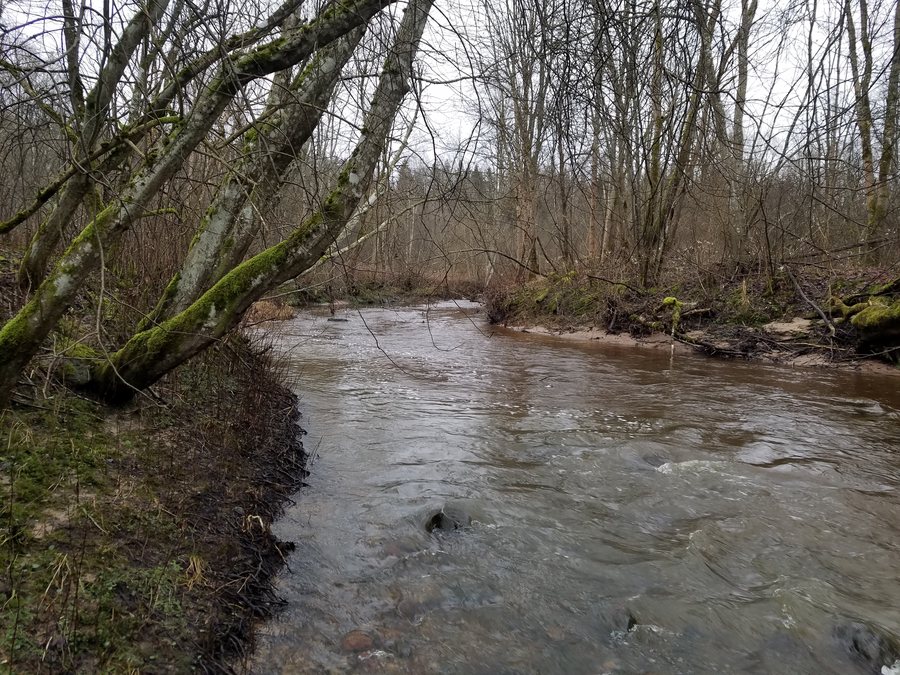
- It runs along roads and field edges in the Alanta area, as well as through more densely forested sections that are harder to walk.
Religious buildings in Alanta
The synagogue combines several features that make it interesting to anyone exploring the history of Jewish architecture in Lithuania: it dates from the mid-19th century, is in the Romantic style, and is protected by the state as a religious monument. Its classification as one of the country’s 17 surviving wooden synagogues also gives it a distinctive architectural and historical context. The synagogue is not currently open to visitors on a regular basis. As this status may change, check again before your trip.
The Church of St. James the Apostle offers a different architectural focus. Its construction between 1904 and 1912 and its design by Liepāja architect K. E. Strandmann place it in a specific historical period. Its neo-Romantic design can be described through several clearly identified architectural features: two towers, a hall-style layout, three naves, and a Latin cross-shaped floor plan. This makes it possible to compare the two religious buildings not only by style; their floor plans and layouts also differ significantly.
The “Alanta” hiking route
The route starts at the Alanta municipal administration. It is considered fairly long and challenging, and requires good preparation. This is an important starting point for your planning: the hike should not be treated as a casual, short detour. The route description mentions both roads and field edges in the Alanta area and more densely forested sections. The path is particularly difficult to walk in those forested areas. The terrain is not consistent throughout; give the wooded sections particular consideration when assessing the route.
If you are considering this hike, take its length, difficulty, and varied sections into account together. The route passes through the Alanta area, but the sections mentioned do not mean that every part is a forest trail: roads, field edges, and more densely forested passages are all part of the route’s character. Good preparation is explicitly one of the stated requirements.
Which focus suits your trip?
Alanta’s religious buildings and hiking route appeal to different interests. The buildings make good subjects for a trip focused on architecture and history; the route is an option for travelers who want to take on a longer, challenging hike. Comparing their specific features can help you choose a focus: with the religious buildings, the emphasis is on style, construction period, and design; with the route, it is on length, preparation, and varied trail sections. This lets you tailor your research about Alanta to what interests you most about the trip.
Discover more destinations: Girsteitiškis, Serapiniškė, Anykščiai, Visaginas, Kirdeikiai, Bičionys, Dubingiai, Leliūnai.
Back to the wider travel overview: Utena County.

