
Hotels in Vilnius
Vilnius is not equally easy to explore from a single hotel location for every kind of trip. Your choice will depend mainly on the places you plan to visit, your arrival time, and whether you want to stay right in the historic center or in a neighboring district. The Old Town, Stotis, and Užupis each have a distinct atmosphere and location. This guide will help you compare location, amenities, and booking conditions to find the right fit for your itinerary.
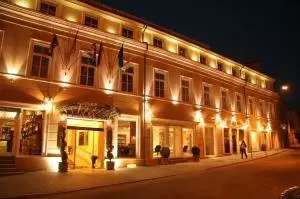 Hotels in Vilnius
Photo: Andrey Demianchyk
Quick facts
- Vilnius’s historic center is a UNESCO World Heritage Site, with a richly layered cityscape.
- Historic lanes, squares, and architecture shape a stay in the Old Town; some routes run over cobblestones.
- The Stotis district is near the train and bus stations and directly adjoins the Old Town.
- Užupis lies across the Vilnelė River, close to the Old Town, and is known for its arts and cultural scene.
- Vilnius has a bus and trolleybus network; check current connections for your exact hotel address.
- A district name alone does not tell you how far a hotel is from the attraction or stop you want to reach.
- Room features, included services, cancellation terms, and availability vary by property and travel dates.
Choose your location based on your itinerary
Start with the places you actually want to visit during your stay, rather than the hotel’s star rating. If you mainly want to stroll through the Old Town, visit churches and courtyards, and enjoy dinner in the evening without a long trip back, you may prefer accommodation in the historic center or right on its edge. The guide Explore Vilnius can help you get your bearings among the districts and walking routes; the page Vilnius attractions brings together specific places to visit.
The historic center is a UNESCO World Heritage Site. Its winding layout, squares, and buildings from several eras are part of its appeal, but this also means that two hotels described as being in the “Old Town” may not offer equally short walks. Check the exact address, plan your daily starting point, and consider whether the route to the hotel is manageable with luggage or for anyone with limited mobility. Cobblestones can be less convenient for strollers and rolling suitcases than a smooth road; if needed, ask about an easily accessible entrance.
Old Town, Stotis, or Užupis?
Old Town: It suits a stay focused on historic attractions and short walks. If you want to combine Vilnius University, religious landmarks, and the southern city gate on one route, compare their locations before booking with Vilnius University, the churches of Vilnius, and the Gate of Dawn. Check whether the accommodation is on a busy street and whether rooms are available facing the courtyard or a quieter side.
Stotis: The station district is worth considering if you arrive by train or long-distance bus, or are continuing your journey by rail. It lies immediately beside the historic center and combines transport links with cafés, culture, and nightlife. That does not automatically make every accommodation here the best choice: compare the specific street, nighttime access, and walk with your luggage. For onward travel and arrival, the guide to Vilnius Airport may also be helpful; check current connections and times before your travel day.
Užupis: This district lies on the other bank of the Vilnelė, close to the Old Town. It appeals to travelers who want to include art, small galleries, and a neighborhood with its own distinctive atmosphere in their stay. A walk through Užupis fits easily into a day in the city; when choosing a hotel, however, look closely at bridges, routes, and slopes rather than relying on a rough distance on the map.
Factor in transport and daily journeys
Go Vilnius describes Vilnius as a compact city with an integrated network of buses and trolleybuses. Whether a particular accommodation is conveniently located for your day’s plans depends on your specific destinations, the time of day, and current routes. So check the connection from the hotel to your main destinations, not just the distance to the nearest stop. For walking routes, also consider whether you will be traveling with luggage, children, or limited mobility.
When arriving by plane or train, the first and last leg of your journey often matters more than the hotel’s theoretical proximity to the center. Make a note of the exact hotel address, how to get in after check-in, and whether you can leave your luggage. If you arrive late, confirm with the property how key handover and entry are arranged. Staying near a station can be useful; for a hotel in the Old Town, check whether a taxi or transfer can take you to the door.
Use the latest information from the city’s transport service and your accommodation to plan your routes. Timetables, roadworks, and stops may change; general hotel descriptions and older travel reports are no substitute for checking up-to-date information.
Compare amenities to suit your stay
When choosing a hotel, consider which services are actually included with the room you book. Compare room size, bed configuration, breakfast, air conditioning or heating, Wi-Fi, elevator access, and step-free accessibility. Families should ask about a crib, connecting rooms, and the terms for additional guests. Business travelers may want to check for a suitable workspace and reliable internet; for a longer stay, laundry facilities or a kitchenette may be useful.
If you are traveling by car, check before booking whether parking is available, can be reserved, and is suitable for your vehicle. “Parking at the hotel” is not a given in the Old Town. Ask about access, fees, restrictions, and an alternative in case the hotel parking is full. If you have a rental car, it is also worth considering whether you will need it at all while staying in the city center.
A hotel’s photos and category only tell you so much about what it is like to stay there. Read recent guest reviews with a focus on noise, cleanliness, mattresses, heating, elevators, and reception. Check whether comments relate to the same room type or a different part of the building. If you are unsure, contact the hotel directly with specific questions about what matters for your trip.
Confirm the price, cancellation policy, and arrival details in writing
Rather than comparing prices that change over time, check that each offer covers the same things: number of nights and guests, room type, breakfast, taxes and extra charges, payment date, and the deadline and terms for free cancellation. A lower advertised total may come with different conditions. Read your booking confirmation in full and keep an offline copy, including the property’s address and phone number.
Ask about check-in and check-out times, luggage storage, late arrivals, policies for children or pets, and reception availability. If you have a specific need—such as a step-free entrance, an accessible bathroom, or a quiet room—ask the property to confirm the exact features in writing before you pay. These details can help prevent misunderstandings when you arrive.
Take cultural events and travel dates into account
If you are specifically interested in architecture and history, choose a hotel location along a planned route: the university and religious buildings are part of the city’s historic fabric, while the Gate of Dawn is on the southern edge of the Old Town. If your trip coincides with a major event, consider your routes and expected visitor numbers rather than relying on generic claims about the “best” hotels. If the Kaziukas Fair falls during your trip, check that year’s program and choose a location based on whether you want to arrive early or return easily in the evening. Dates and street closures can change from year to year.
For a short stay, a central base is often convenient; for a longer trip, a quieter district with good connections may better suit your daily routine. The best choice is not the property with the broadest promises, but the one whose location and terms match your personal plans.
Frequently asked questions
Where should I stay for my first visit to Vilnius?
If you mainly want to explore the Old Town and central attractions on foot, compare hotels in the historic center and on its edge. Check the exact address, not just the district name; Stotis may also be convenient if you arrive by train or bus.
Is Stotis too far from the Old Town?
You can’t answer that based only on the name of the district. Stotis borders the Old Town, but the walking distance, street layout, and hotel access depend on the exact address. Check the route with your luggage and in relation to your daily destinations.
Which area is best for art and alternative culture?
Užupis is known as an artsy district and lies close to the Old Town, across the Vilnelė. It makes a good base if you like this kind of atmosphere; before booking, check the routes to your other destinations.
What should I consider when arriving from the airport?
Compare the current transport options with your hotel’s location and check how you will get to the property after check-in. For late arrivals, confirm key handover and access directly with the hotel; journey times can change.
What should families or travelers with limited mobility look out for?
Ask about elevators, step-free entrances, bathrooms, room layouts, and the route from your transport to reception. Cobblestones on historic streets can make getting around more difficult. Confirm any important features specifically before booking.
