
Bezdonys – Manor History, Railway and River
Accommodation in Bezdonys
Key facts
You can explore Bezdonys for your trip planning through several distinct points of reference: the railway as an arrival-related topic, historic sites and events, and the town’s location on the Bezdonė. These perspectives can help you understand the town in relation to your specific interests. For getting there, passenger information at the station is a practical point of reference; for exploring its history, the manor, railway tradition and history of the forced-labour camp are separate topics.
- The Bezdonė flows through Bezdonys and is a left-bank tributary of the Neris.
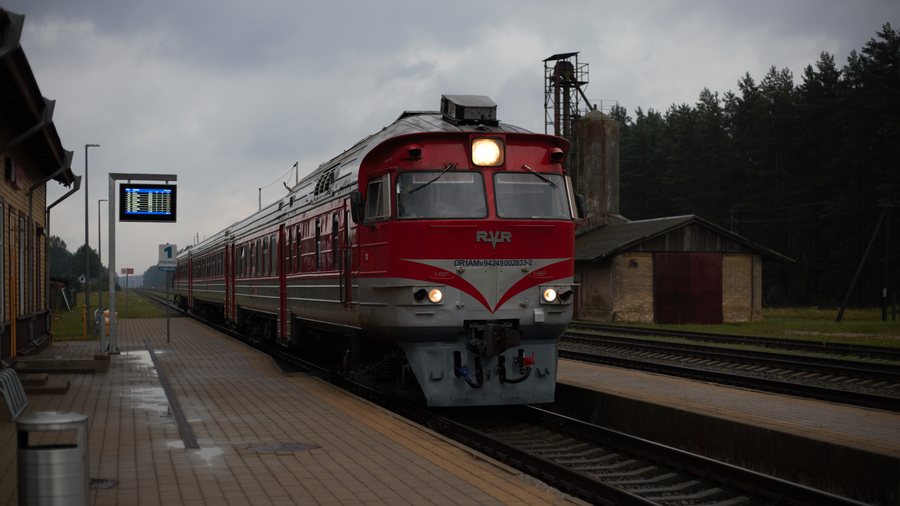
- The railway station was established in 1862 during the construction of the Saint Petersburg–Warsaw Railway, which runs through Bezdonys.
- LTG Link provides real-time information on train arrivals and departures at the station.
- On the outskirts of the town, the 16th-century Bezdonių (Arvydų) manor has been preserved; it is privately owned.
- A Jewish forced-labour camp subordinate to the Vilnius Ghetto operated in Bezdonys.
- The Jewish workers imprisoned there extracted peat in the village of Buzaraisčio.
Railway information and local history
The railway station was established in 1862, when the Saint Petersburg–Warsaw Railway, which runs through Bezdonys, was built. Its history is therefore linked to a specific year and a railway line that passes through the town. This is distinct from the information available to travellers today: LTG Link provides real-time information on train arrivals and departures in the waiting room and on the platforms, using visual and audio media.
If you arrive by train, these displays and announcements can help you find your way around the station. Check the latest information before your journey so that your travel plans are based on what is currently available. The two railway-related references answer different questions: the year 1862 places the station’s establishment in its historical context, while the real-time information is intended to help travellers orient themselves now.
The manor on the outskirts
On the outskirts of Bezdonys, the 16th-century Bezdonių (Arvydų) manor has been preserved. It is privately owned. This makes it a specific historical point of reference for the town, but not a place you should plan to visit as publicly accessible without checking first. If you would like to include the manor in your travel plans, check in advance whether a visit is possible.
The manor’s location on the outskirts and its date give it a different connection to Bezdonys than the railway station: here the focus is a preserved estate from the 16th century, while the station relates to the establishment of a railway station during railway construction in 1862.
A historical connection with Buzaraisčio
The history of Bezdonys includes a Jewish forced-labour camp subordinate to the Vilnius Ghetto. The Jewish workers imprisoned there extracted peat in the village of Buzaraisčio. For clarity about the locations, it is important to distinguish the two: the camp was in Bezdonys; peat extraction took place in Buzaraisčio.
This connection is a distinct chapter in the town’s history and differs from both the history of the manor and the development of the railway station. So, when exploring these historical connections, associate the forced-labour camp and peat extraction with the locations named for each. This also preserves the distinction between the location of the camp and the village where the imprisoned workers extracted peat.
Geographical context: the Bezdonė and Neris
The Bezdonė flows through Bezdonys and is a left-bank tributary of the Neris. Its description thus connects two geographical scales: its course through the town and its classification as a tributary. When looking at Bezdonys on a map, note both names; Bezdonė and Neris refer to different rivers.
Together, these details offer a straightforward picture of different aspects of the town: the Bezdonė describes a geographical relationship, the railway station links present-day information with its historical year of establishment, and the manor and forced-labour camp represent different historical topics. For your travel plans, you can follow whichever of these interests you most, and only plan a possible visit to the privately owned manor after checking in advance.
Discover more destinations: Kiemeliai, Eišiškės, Glitiškės, Aluona, Žuklijai, Avižieniai, Aukštadvaris, Strėva.
For the broader travel overview: Vilnius District.

