
Discover Tauragė
Accommodation in Tauragė
Tauragė can be explored through its historical sites and regional transport options. The DOT bunker, a memorial in the courtyard of the former NKVD headquarters, and a neoclassical bank building represent different aspects of the city’s history. There is also a regional electronic travel pass. Together, these can help you decide whether to focus your trip on Tauragė itself or the wider region before choosing accommodation.
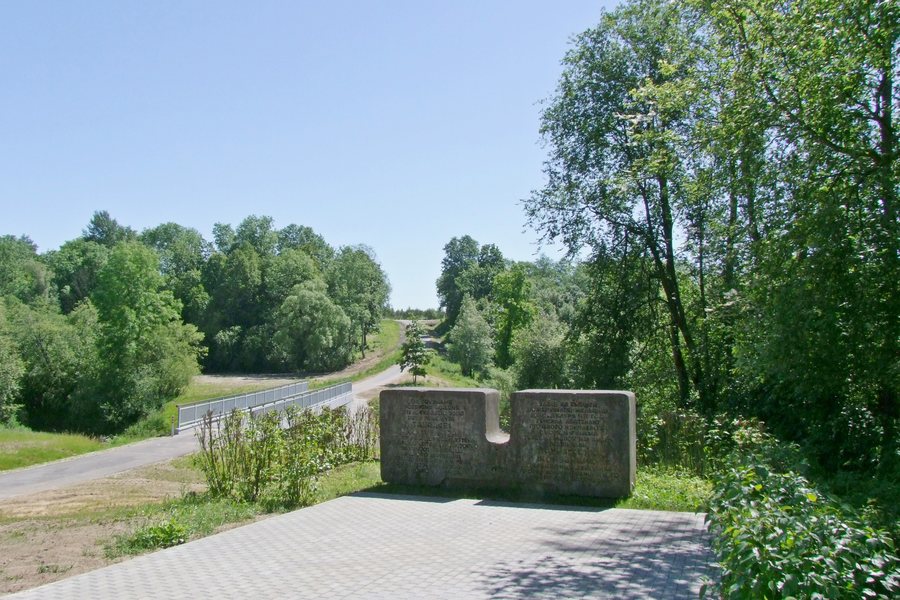 File:Convention of Tauragė (Tauroggen) – Memorial.jpg
Photo: Alta Falisa via Wikimedia Commons, CC BY-SA 4.0
Key facts
- The regional electronic travel pass connects municipalities in the Tauragė, Jurbarkas, and Šilalė districts, as well as Pagėgiai City Municipality.
- It allows unlimited travel throughout the region.
- The DOT bunker is part of a defensive line begun in 1940.
- A memorial to the victims of the resistance was erected in 1993 in the courtyard of the former NKVD headquarters.
- From 1944 to 1955, people were interrogated and tortured at the former NKVD headquarters.
- The bank building was designed by A. Funk and M. Songaila in 1935; it has neoclassical features.
Historical sites and their contexts
The DOT bunker is part of a defensive line whose construction began in 1940. This year marks the start of the line and gives the bunker a specific historical context. For travelers interested in military history, this offers a different focus from commemorating the resistance at the former NKVD headquarters.
Two periods come together at the former NKVD headquarters: from 1944 to 1955, people were interrogated and tortured there; in 1993, a memorial to the victims of the resistance was erected in the courtyard. The memorial commemorates the victims, while the dates distinguish the site’s former use from its later commemoration. This allows you to understand the site through both its history and its memorial.
Architecture as a distinct perspective
The bank building adds architectural history to these themes. A. Funk and M. Songaila designed it in 1935; it has neoclassical features. The term refers to an approach based on classical forms. The design year, architects, and style offer different ways to understand the building.
Tauragė brings together several areas of interest: the history of a defensive line, remembrance of the victims of the resistance, and a building with a defined architectural style. As you plan your trip, you can weigh these themes according to whether you are more interested in historical events, memorial sites, or architecture.
Regional travel pass and accommodation choices
The regional electronic travel pass connects municipalities in the Tauragė, Jurbarkas, and Šilalė districts, as well as Pagėgiai City Municipality, and allows unlimited travel throughout the region. Its coverage is relevant when choosing a base if you plan to visit several municipalities within the pass’s area. As coverage may change, check the transport operator’s current information before your trip.
First decide which places matter for your trip, then compare your plans with the current information about the travel pass. This will help you assess Tauragė as a destination and a place to look for accommodation based on your own interests.
Discover more destinations: Pilis I, Lumpėnai, Margiškiai, Veliuona, Smalininkai, Jurbarkas, Pagėgiai
See the main travel overview: Tauragė District.

