
Lumpėnai: Cultural History and Location
Accommodation in Lumpėnai
Key facts
Two specific reference points help locate Lumpėnai: it lies east of Pagėgiai and on the Jurbarkas–Šilutė road. This provides a clear sense of direction for planning your trip before choosing where to stay. The stated distance and the road name describe different aspects of its location.
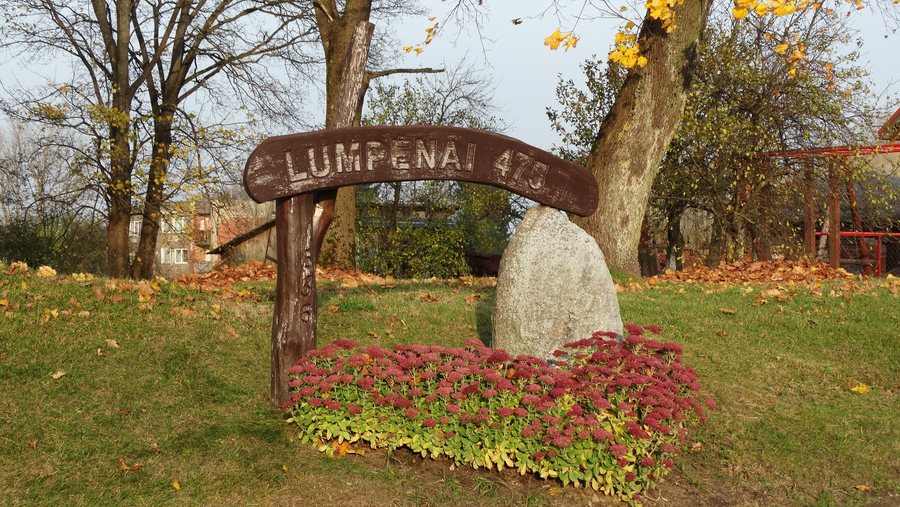
- Lumpėnai is 9 kilometers east of the town of Pagėgiai.
- The town is on the Jurbarkas–Šilutė road.
- Rambyno kalnas lies south of the village.
- The hill is in the territory of Lumpėnų seniūnija and is an important site in Lithuanian cultural memory.
- In 1739, the first school offering primary education opened in Lumpėnai.
- In 1944, classes in Lithuanian began there as part of a change in the education system.
- The school operated until 1983.
- On the disused old Evangelical Lutheran cemetery, symbolic krikštai mark the burial places of those laid to rest there.
Location and orientation
If you are considering Lumpėnai as a possible place to stay, you can compare these details with the other stops on your trip. When looking for accommodation, it helps to assess the location first and then consider which themes you want to shape your stay. Its cultural history offers specific points of interest without requiring you to focus your visit on a single topic.
History and cultural memory
Rambyno kalnas adds an important site in Lithuanian cultural memory to the village’s points of reference. It lies south of Lumpėnai, in the territory of Lumpėnų seniūnija. For travelers interested in Lithuanian cultural history, Rambyno kalnas is a prominent local landmark.
The school’s history can also be understood as a sequence of events: the first school offering primary education opened in 1739. In 1944, classes in Lithuanian began there as part of a change in the education system; the school operated until 1983. These three dates provide a clear framework for its history—from the opening, through a change in the language of instruction, to the end of school operations. This turns a single historical date into a development that places Lumpėnai in context across several periods.
This history adds a different perspective to the description of the location: it focuses on education and changes in the language of instruction. If you like to take specific historical connections into account when choosing a travel destination, the school’s history offers several points of reference over time, not just a single year.
The krikštai of the old cemetery
Another point of interest is the old Evangelical Lutheran cemetery, which is no longer in use. The symbolic krikštai there mark the burial places of those laid to rest. The term krikštai refers to this specific memorial marker and can therefore be considered a distinct cultural point of interest alongside the history of the cemetery.
The school and the cemetery represent different aspects of local history: the school’s timeline draws attention to teaching and education, while the krikštai refer to burial and remembrance. Together with the significance of Rambyno kalnas, these offer three clearly distinct themes to guide your interest in Lumpėnai. The historical details can help you decide which theme you would like to explore further, without combining every aspect into a single focus for your visit.
Lumpėnai for your travel plans
When weighing up different destinations or places to stay, you can assess Lumpėnai by its location and these cultural and historical highlights. Its distance from Pagėgiai and its position on the Jurbarkas–Šilutė road help orient you geographically; the school, Rambyno kalnas and cemetery make the town’s themes more tangible. Which of these aspects matters to your plans depends on whether you are most interested in location, educational history or memorial culture.
Discover more destinations: Pagėgiai, Veliuona, Tauragė, Margiškiai, Smalininkai, Pilis I, Jurbarkas.
For the broader travel overview: Tauragė County.

