
Raudondvaris: Renaissance Manor and Museum
Accommodation in Raudondvaris
Key facts
Raudondvario dvaras gives Raudondvaris a distinct cultural and historical focus. As an architectural monument of the Lithuanian Renaissance dating from the early 17th century, the manor combines a specific date with a clear stylistic designation. If you are interested in history and architecture, this is a good starting point for understanding the place. You can look beyond the building itself: in addition to the 3.8-hectare park, the estate includes two utility buildings, an orangery, stables, and an icehouse. The various elements bring the scale of the estate to life. The focus is therefore not only on Renaissance architecture, but also on the different buildings and the park. This offers a useful way to choose what to focus on during your visit: you can concentrate on understanding the monument or consider the manor estate’s various elements together.
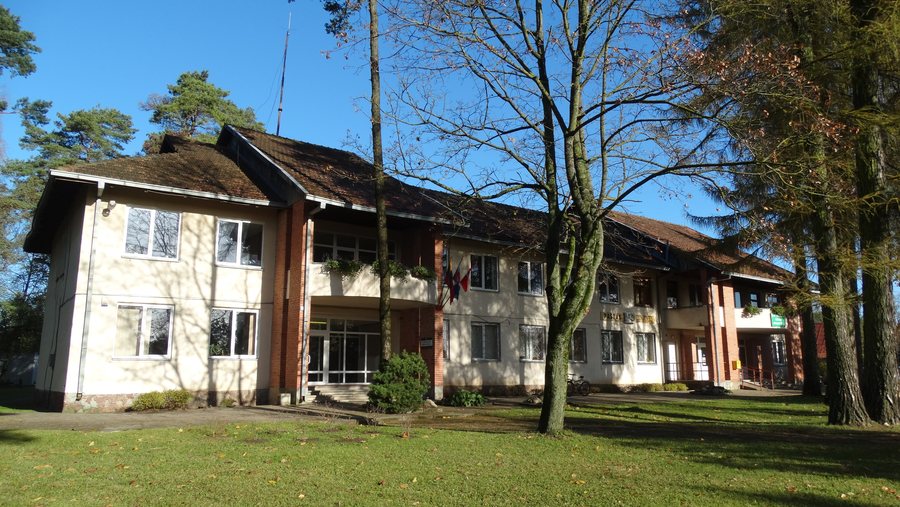
- Raudondvario dvaras is an architectural monument of the Lithuanian Renaissance dating from the early 17th century.
- The manor estate includes a 3.8-hectare park, two utility buildings, an orangery, stables, and an icehouse.
- Kauno rajono muziejus is located in the manor house and presents the history of the Counts Tiškevičius, who owned the estate.
- One of the museum’s exhibitions is devoted to Lithuanian composer Juozas Naujalis (1869–1934).
- The museum also displays the installation “Stiklo kambarys” by Audrius Vaišnys and Agnė Danelevičiūtė-Vaišnienė.
- The interactive Dramaturas tour comprises 14 stops through rooms and cellars, the park, and the surrounding manor estate.
- The park is open to the general public. The park regulations date from 2010; check the current conditions before your visit.
Discover the manor and estate
Museum: ownership history, music, and art
Kauno rajono muziejus is located in the manor house and complements its architectural focus with several exhibition themes. It presents the history of the Counts Tiškevičius, who owned Raudondvario dvaras. The estate’s ownership history is therefore one of the themes through which you can get to know the place better. Another exhibition is devoted to Juozas Naujalis, a Lithuanian composer whose life dates are given as 1869 and 1934. A further point of interest is the installation “Stiklo kambarys” by Audrius Vaišnys and Agnė Danelevičiūtė-Vaišnienė. These themes offer different perspectives: the exhibition on the counts focuses on the manor’s history, while the Naujalis exhibition and the installation introduce their own cultural themes. If you plan your visit around your interests, these differences can help you focus on the estate’s history, music, or the named art installation.
Put the tour and park in context
The interactive Dramaturas tour comprises 14 stops through the manor’s rooms and cellars, as well as the park and the surrounding estate. Its scope therefore extends beyond a single part of the building and includes both indoor and outdoor areas. This is a different way to explore the site from focusing on a particular museum exhibition theme: the tour brings together different parts of the manor in one offering. The park is also a distinct part of the estate and is open to the general public. When planning, it is helpful to distinguish between these details: the 14 stops describe the scope of the tour; for access to the public park, check the current visitor conditions, as the park regulations date from 2010. This can help you decide whether the exhibitions, the tour, or the park are the best focus for your visit, without treating the different offerings as the same thing.
Discover more destinations: Dievogala, Girininkai, Neveronys, Kačerginė, Mastaičiai, Domeikava, Čekiškės seniūnija
For the broader travel overview: Kauno rajono savivaldybė.

