
Kaišiadorys: Walking Route, Railway Station Structures and Family History
Accommodation in Kaišiadorys
Quick facts
The walking route is 5 km long and leads through Kaišiadorys, including to the railway station and the old water tower. This distance provides a concrete point of reference for planning: you can consider whether a continuous walking route fits into your day. Check current route conditions locally before setting out.
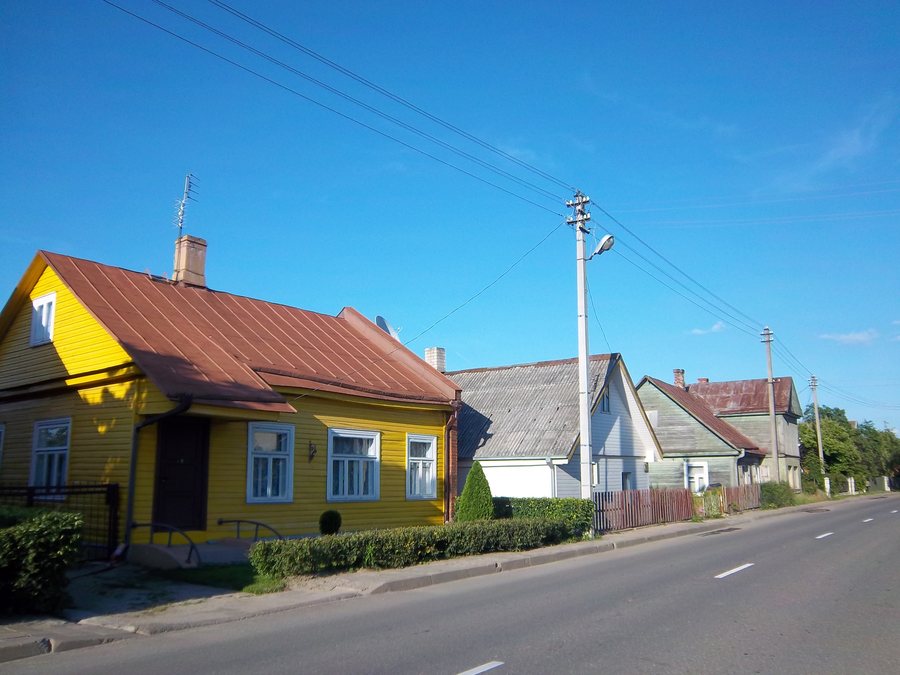 File:Vytauto didziojo g.JPG
Photo: Almantas Steckevičius at Lithuanian Wikipedia via Wikimedia Commons, Public domain
- A 5 km walking route leads through Kaišiadorys, including to the railway station and the old water tower.
- The water tower at the railway station was built in 1883; its architect was E. E. Frykas.
- The railway station viaduct dates from 1860.
- The Brazauskų namai-muziejus preserves the family’s furniture, photographs, manuscripts and books.
- Nearby, an educational programme at the Žasliai Traditional Crafts Center introduces visitors to the preparation and eating customs associated with Kakorai.
On foot through Kaišiadorys
The route combines exercise with views of named destinations in the town. If you like to structure your stay around a walk, it provides a clear framework. The railway station and water tower put the focus on architecture; those more interested in family objects or food culture can give these topics separate consideration in their plans.
Structures at the railway station
Two distinct structures with clear dates stand at the railway station: the viaduct dates from 1860, and the water tower was built in 1883. The dates are 23 years apart; the viaduct is the older of the two structures. This makes the railway station a place for a simple comparison across time, rather than treating both structures as one undifferentiated impression.
The water tower’s architect is also known: E. E. Frykas. A viaduct is a bridge structure, while a water tower is a different type of structure. These details offer architecture enthusiasts two simple points of interest: different types of structures and different years of construction.
Family history and food culture
The Brazauskų namai-muziejus preserves the family’s furniture, photographs, manuscripts and books. The collections mentioned range from objects and images to written materials. This gives the museum a different cultural focus from the dated structures at the railway station: here, family objects take center stage; there, architectural history does.
Another focus lies near Kaišiadorys: an educational programme at the Žasliai Traditional Crafts Center introduces visitors to the preparation and eating customs associated with Kakorai. Participants prepare Kakorai filled with carrots and onions together with Nijolė Adukonienė, then taste them with a sauce made from crispy pieces of pork, onions, butter and sour cream. The programme combines learning about eating customs with preparing and sampling the food together. If you plan to take part, check the current participation details in advance; they may change.
Discover more destinations: Garliava, Jonava, Pašuliai, Šiluva, Čekiškė, Piliuona, Altoniškiai, Ariogala.
For the broader travel overview: Kaunas District.

