
Lithuanian Tree Cake (Šakotis): How It’s Made and What It Tastes Like
Šakotis is a traditional Lithuanian tree cake with distinctive spikes. The batter is applied in layers as it bakes on a rotating spit, creating the irregular “branches” that give the cake its appearance. Šakotis is often served at celebrations and special occasions, and is also a popular gift to bring home.
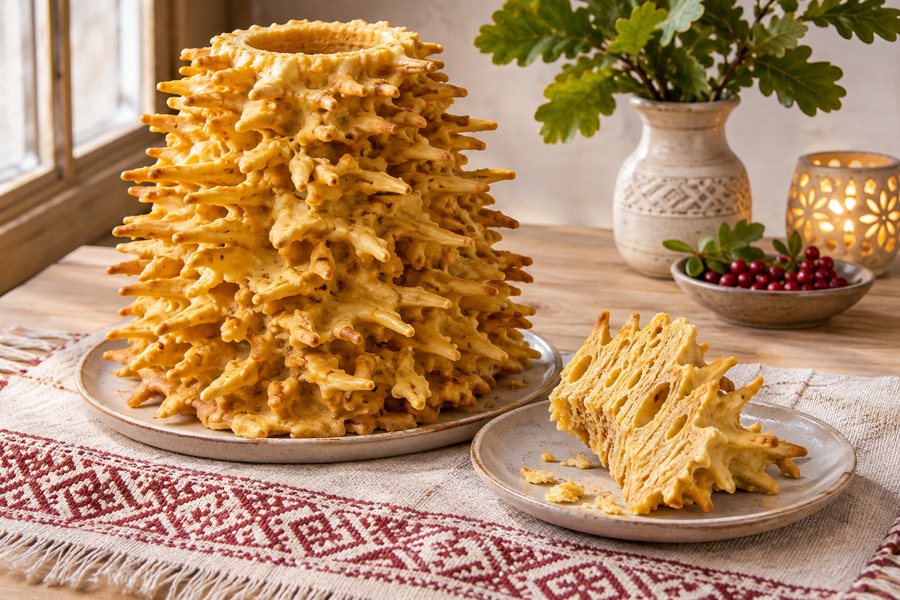 KI-generiertes Bild: Šakotis, litauischer Baumkuchen.
Photo: KI-generiert mit OpenAI
Quick facts
- Šakotis is a Lithuanian baked good with a distinctive spiky shape.
- Batter is continually added as it bakes, allowing the cake to grow outward.
- The surface turns golden brown and develops numerous spikes.
- Recipes and sizes vary from bakery to bakery.
- The mildly sweet cake is often chosen as a gift to bring home and needs enough space during transport.
- If you have allergies, ask the bakery about its ingredients.
How the cake is made
Unlike an ordinary sponge cake, Šakotis is continuously coated with batter as it bakes. It grows outward, developing a golden-brown surface with numerous spikes. Traditionally, the cake is rotated over a heat source. Its preparation and size vary from bakery to bakery; a large Šakotis may be intended for several people.
The flavor is usually mild and sweet. The exact recipe may include eggs, butter, flour, and other ingredients. Anyone with allergies should ask to see the ingredients list before buying. For a small taste, a pre-cut piece is convenient; a whole cake is often chosen as a gift.
Where to try and buy it
Šakotis may be available at pastry shops, bakeries, and markets. The selection varies from shop to shop, and regional or seasonal offerings change. In Vilnius, you can combine a purchase with a walk around the city; Kaunas and Trakai are also possible stops on a road trip. Contact the business for availability and opening hours.
As a souvenir, its shape makes an impression, but the cake needs some room during transport. Sturdy packaging helps protect the spikes. Ask the bakery about storage and shelf life, especially if you have a long journey back. If you’re traveling by plane, make sure the packaging can be stored appropriately. For more culinary ideas, see the overview of Lithuanian cuisine.
Serving and comparing
Šakotis is usually broken or cut into pieces and served with coffee or tea. Its light, browned texture sets it apart from filled pastries. If you’d like to pair a sweet treat with a savory dish, you could try potato dishes or rye bread first. The cake also offers a chance to ask about how it is made. Some businesses demonstrate the process, while others sell only finished cakes; demonstrations are not part of every visit.
A whole cake can make a fitting dessert to share at a celebration, while a single portion is enough for a short break. Its spikes make the cake decorative, but harder to pack in tight luggage. When buying, ask for a box that fits its size. Also check the ingredient label if you need to avoid allergens.
Frequently asked questions
Why does Šakotis have spikes?
The distinctive spikes form as layers of batter are applied to a rotating spit.
Does Šakotis make a good gift to bring home?
Yes, this specialty is often bought as a gift. Make sure the packaging, space, and shelf life suit your journey.
How is the cake eaten?
It is usually divided into pieces and served with coffee or tea.
