
Karaim pastries (kibinai) from Trakai
Kibinai are baked, crescent-shaped pastries closely associated with Lithuania’s Karaim community. They are especially well known in Trakai, where the Karaim history dates back to the Middle Ages. The classic filling is minced lamb or beef; today, depending on the bakery, poultry, vegetables or cheese may also be available. The shape, dough and seasoning can vary.
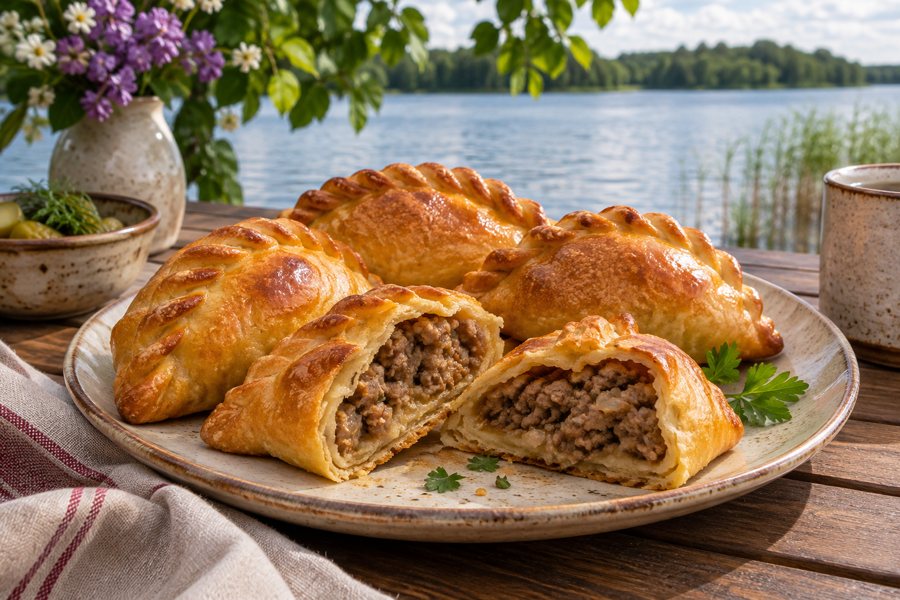 KI-generiertes Bild: Kibinai mit herzhafter Füllung.
Photo: KI-generiert mit OpenAI
Quick facts
- Kibinai are associated with the Karaim culinary tradition in Trakai.
- The traditional version is filled with meat and sealed before baking.
- Baking browns the outside of the dough while keeping the filling juicy.
- Today’s menus may include a range of fillings.
- Dough and fillings vary from one establishment to another; a vegetable filling is not automatically vegan.
- A visit to Trakai can be paired with a taste of kibinai and a trip to the island castle.
Origins and traditional filling
The Karaim brought their culinary traditions to Lithuania. Kibinai are among the foods that connect Trakai with its history and Karaim culture. The traditional version is filled with meat and carefully sealed before baking. When cut open, the filling remains juicy while the dough is browned on the outside.
Modern menus often offer several fillings. Ask about the ingredient list if you avoid certain meats or have an allergy. The dough may contain milk, eggs or other ingredients; even a vegetable filling is not automatically vegan. Restaurants and bakeries set their own recipes, serving sizes and side dishes.
Trying kibinai in Trakai
A visit to Trakai pairs well with a taste of kibinai. The island castle and lakeside scenery make for a memorable day trip from Vilnius. Plan your meal after sightseeing, or take a snack along for a break. Which establishments are open depends on the day of the week and the season; you can check opening hours and availability directly with the business before setting off.
If your route takes you to other cities, you can broaden your culinary choices in Kaunas or Panevėžys. These places are known for other local dishes, and not every city offers the same range of kibinai. To try this regional speciality, look for a Karaim-style version in Trakai itself. The overview of Lithuanian cuisine introduces more classics.
Serving and enjoying kibinai
These pastries are often eaten warm as a snack or light meal. Depending on their size, one may be enough for a snack, while several make a more filling meal. An extra sauce is not always needed, since the filling already provides plenty of flavour and juiciness. Some establishments serve them with broth or other side dishes, but this is not a universal practice.
Kibinai are a convenient choice for a casual outing: they can be eaten on the go and don’t require a multi-course meal. If you’re taking them with you for a while, pay attention to the temperature and any advice from the business. If you have dietary restrictions, it’s important to ask directly, as meat fillings, dough ingredients and the risk of cross-contact can vary.
Frequently asked questions
What are kibinai filled with?
Traditionally, they are filled with minced lamb or beef. Modern versions may contain cheese, vegetables or poultry.
Where are kibinai especially well known?
They are closely associated with Trakai and its Karaim community.
Are vegetarian kibinai available?
Some establishments offer vegetable or cheese fillings. Ask about the ingredients in the dough and how the kibinai are prepared, too.
