
Jewish History in Lithuania
Jewish life in Lithuania shaped religion, education, language, and the arts for centuries; Vilnius in particular became an important cultural center for the Litvaks. The Holocaust destroyed most of the country’s Jewish communities and left memorial sites in Vilnius, Paneriai, and Kaunas. Museums, former Jewish quarters, and memorials make this history tangible at specific places.
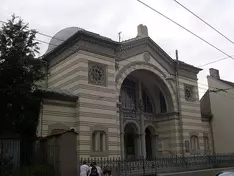 Vilnius Synagoge
Photo: upyernoz\www.flickr.com
Vilnius Synagoge
Photo: upyernoz\www.flickr.com
Key facts
- Litvaks: Jewish people born in Lithuania or connected with the country are known by this name.
- Vilnius: Historical sources attest to a Jewish community there by the late 16th century at the latest.
- City privileges: The Jewish community received a privilege in 1593; in 1633, the boundaries of the historic quarter were established.
- Vilna Gaon: The scholar Eliyahu ben Shlomo Zalman lived from 1720 to 1797 and shaped Jewish scholarship in Vilnius.
- Holocaust: Jewish people and communities were systematically persecuted during the German occupation from 1941 to 1944; a large proportion of the Jewish population was murdered.
- Memorial sites: Paneriai near Vilnius and the Ninth Fort in Kaunas document mass killings and the persecution of different victim groups.
- Museum: The Museum of Culture and Identity of Lithuanian Jews opened in 2024 in a former Jewish school building in Vilnius.
Jewish life in Vilnius before the 20th century
Over several centuries, Vilnius developed into an important center of Jewish religious and cultural life in Eastern Europe. The Vilna Gaon Museum dates the local community to the late 16th century at the latest: in 1592, Jewish residents appealed to the ruler after a wooden synagogue was destroyed. The following year, the community received a privilege allowing its members to live freely, practice their religion, pursue crafts, and rebuild a house of prayer. A further privilege, granted in 1633, defined the boundaries of the quarter.
The historic streets of Žydų, Stiklių, and M. Antokolskio pass through part of this former quarter. Today, they are not an unchanged backdrop from a single era: persecution, war, and Soviet urban planning have erased many traces. If you explore the area on foot, connect its history with the few surviving buildings, memorial markers, and explanatory exhibits. For a general overview of visiting the city, see the page on Vilnius; for specific cultural destinations, visit Vilnius attractions.
The Vilna Gaon and Litvak culture
Eliyahu ben Shlomo Zalman, known as the Vilna Gaon or the Gaon of Vilnius, lived from 1720 to 1797. The museum describes him as a scholar of the Torah and Talmud whose work strengthened Vilnius’s importance as a center of traditional Jewish culture in Eastern Europe. His life represents a long scholarly tradition, but not the full diversity of Jewish experiences in Lithuania.
In the museum’s current usage, the term “Litvak” refers to Jewish people born in Lithuania or connected with the country. Litvak culture encompasses more than religious scholarship: exhibitions also explore languages, education, everyday life, literature, music, theater, and the visual arts. The development of Jewish communities is also part of the country’s broader history; learn more in the overview of Lithuanian history.
A museum of identity, everyday life, and art
The Museum of Culture and Identity of Lithuanian Jews is a branch of the Vilna Gaon Museum of Jewish History. It opened on January 18, 2024, in the former Tarbut Gymnasium at 4A Pylimo Street. Its exhibitions present Jewish history and religion, shtetl life, and languages alongside secular culture, literature, music, theater, and the visual arts. A dedicated section focuses on the artist Rafael Chwoles.
The building itself is part of the history of Jewish education in Vilnius: the Hebrew Epstein Gymnasium was founded in 1915 and began operating in this building at 4A Pylimo Street in 1916. A visit can therefore bring together both the development of a community and personal stories of people who lived in Lithuania or left the country for destinations around the world. The official website of the Museum of Culture and Identity of Lithuanian Jews provides current visitor information. Check opening hours, tours, and whether reservations are required shortly before your visit.
Ghettos, persecution, and destruction
After Germany attacked the Soviet Union in June 1941, the German occupation of Lithuania began. Jewish people were stripped of their rights, forced into ghettos, and killed in mass shootings and other murder operations. An exhibition at the Vilna Gaon Museum covers the years 1941 to 1944, including persecution, ghettos, deportations, rescue, and resistance. This history calls for a clear distinction between perpetrators, victims of persecution, and those who helped the persecuted.
The Vilnius Ghetto was established on September 6, 1941, and liquidated on September 23, 1943. Streets and memorial markers around the city make it possible to trace the former ghetto boundary; a plaque at 18 Rūdninkų Street marks the main gate. The site of the Great Synagogue is also a place of remembrance: the building was badly damaged after the war and destroyed in 1953. No synagogue building stands there today. The overview of places of worship in Vilnius helps distinguish surviving religious buildings from lost sites.
Paneriai and the Ninth Fort as memorial sites
Paneriai lies outside central Vilnius. Between 1941 and 1944, it became one of Europe’s major mass murder sites; most of those killed there were Jews from Vilnius and eastern Lithuania. Members of other groups were also murdered there. Today’s memorial and information center are places of remembrance, not ordinary tourist attractions. Read the visitor information, allow time to engage with the history, and behave respectfully on site.
In Kaunas, the Ninth Fort documents both the violence of the German occupation and earlier and later chapters in the city’s history. Its exhibitions cover, among other subjects, the Kaunas Ghetto, mass killings, Jewish victims from other countries, and rescue efforts. If you would like to visit these memorial sites as part of a trip, start with an introduction to Kaunas, add Kaunas attractions, and consult the overview of places of worship in Kaunas for religious buildings. The museums and memorials are located at different sites.
Rescue and assistance in Kaunas
The history of Jewish life in Lithuania is not only a story of persecution, but also of people who helped those being persecuted. Chiune Sugihara worked at the former Japanese consulate in Kaunas from November 1939 to August 1940. There, he issued more than 2,000 Japanese transit visas to refugees without explicit authorization from his government.
The Sugihara House Museum presents this story of rescue alongside the experiences of people fleeing Soviet oppression and Nazi violence. It also commemorates other diplomats and helpers, including Jan Zwartendijk. Allow enough time for a visit to the Ninth Fort as well, rather than treating both places as quick stops. For other museum highlights around the country, the overview of museums in Lithuania offers further ideas.
Planning a respectful visit
In Vilnius, you can combine the Museum of Culture and Identity, the streets of the former quarter, memorial markers, and the Holocaust Museum in a themed visit. Paneriai lies outside the city center and should be planned as a separate stop. In Kaunas, the Sugihara House and the Ninth Fort are two distinct destinations: one tells the story of escape and transit visas, the other of imprisonment, murder, and remembrance. Check access, current opening hours, tours, and any restrictions separately for each site.
If you would like to combine this subject with other city attractions, choose a few relevant places and check routes and opening hours. Be mindful not to treat places of personal remembrance merely as photo backdrops. Read the information provided, follow local rules, and make space for the significance these sites hold for Jewish families and communities.
FAQ
Who is considered a Litvak?
The Vilna Gaon Museum uses the term for Jewish people born in Lithuania or connected with the country. It encompasses a range of family histories, occupations, languages, and religious and secular ways of life.
Why was Vilnius important to Jewish life?
Historical sources attest to a Jewish community there by the late 16th century at the latest. Privileges granted in 1593 and 1633 regulated religious rights and the quarter; later, the scholar Vilna Gaon helped establish the city’s importance as a center of Jewish scholarship.
Where can I learn about Jewish history in Vilnius today?
The Museum of Culture and Identity of Lithuanian Jews presents history, everyday life, and art. The Vilna Gaon Museum has an exhibition about the Holocaust; there are also former Jewish quarters, memorial markers, and the Paneriai Memorial. Check current access information for each site in advance.
Is the Great Synagogue of Vilnius still standing?
No. The synagogue was damaged during the Second World War and destroyed in 1953. The site is now an important place of remembrance and research, but no synagogue building remains.
What happened at Paneriai and the Ninth Fort?
Both sites were locations of mass murder during the German occupation. At Paneriai, most of those murdered were Jews from Vilnius and eastern Lithuania; the Ninth Fort commemorates Jewish and other victims. The memorial sites and exhibitions differ in location and focus.
What role did Chiune Sugihara play?
As Japanese consul in Kaunas, Sugihara issued more than 2,000 transit visas in 1939 and 1940, enabling refugees to continue their journeys. The Sugihara House Museum is in the former consulate and also tells the story of other helpers and the experiences of refugees.
