
Discover Antatilčiai: Hillforts and a Memorial Cross
Accommodation in Antatilčiai
Antatilčiai brings together a visible sign of remembrance and two hillforts with different names. Pilalė and Papilėda can be distinguished by their shape, historical dating, and the routes described. This lets you decide in advance which details you are most interested in exploring at the site.
Key facts
- A wooden cross with a Lithuanian memorial inscription stands in the village center.
- The inscription commemorates the deceased and bears the year 2000.
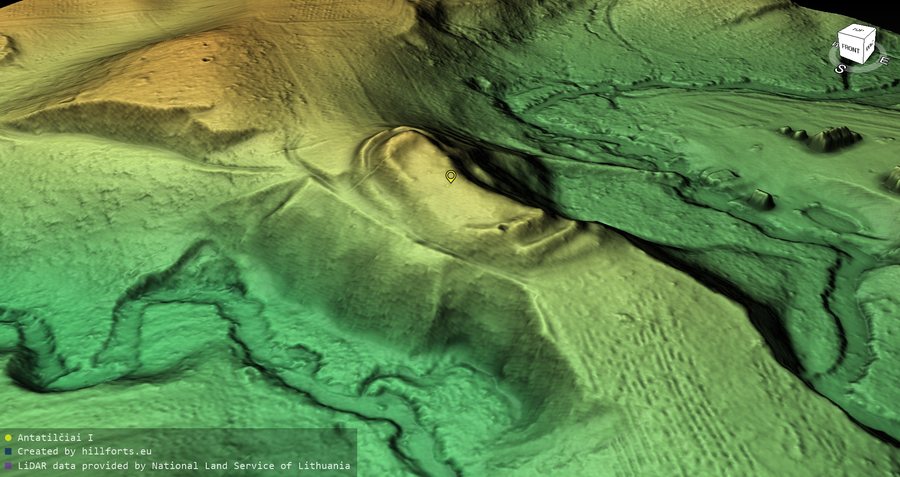
- Antatilčių I hillfort is also known as Pilalė.
- The Pilalė hillfort is dated to the beginning of the second millennium.
- Antatilčių II hillfort is also called Papilėda and has steep, 12 m-high slopes.
- Its triangular platform measures 30 × 15 m and is elongated from west to east.
- The described routes to Pilalė and Papilėda start from different locations.
Two hillforts with different route descriptions
The approach to Pilalė is described as an approximately 650 m-long dirt track from the center of Antatilčiai to the site. The approach to Papilėda is described as an approximately 300 m-long footpath from a farmstead through the forest along the left bank of the Siesartis.
If you compare the two sites, this distinction helps with orientation: the reference point for Pilalė is the village center, while for Papilėda it is the farmstead. Each description refers to its own route; they do not form a single route.
Papilėda’s shape and historical dating
Antatilčių II hillfort (Papilėda) is described in specific terms through its terrain: its slopes are steep and 12 m high. At the top is a triangular platform measuring 30 × 15 m, extending from west to east. Together, the height, shape, and orientation give a clear picture of the site before you consider its historical dating.
The dates also distinguish the two hillforts. Antatilčių I, or Pilalė, is dated to the beginning of the second millennium. Antatilčių II, Papilėda, is dated to the period from the end of the first to the beginning of the second millennium. In both cases, the dates extend to the beginning of the second millennium; Papilėda’s dating also includes the end of the first. For travelers interested in historic sites, this comparison offers a concrete distinction without conflating the two places.
A memorial cross in the village center
Another point of interest lies in the heart of the village: a wooden cross bearing the inscription “Čia išėjusiems atminti. 2000 m.” In English, this means “In memory of those who have passed away. 2000.” The year is part of the inscription, making the cross another specific point of reference in Antatilčiai. Together with the hillforts, it offers a cultural perspective on the place, distinct from looking at its terrain.
Which details suit your visit?
If you are mainly interested in physical features, Papilėda offers the more detailed description of slopes and platform. For route orientation, the distinction between the dirt track from the village center and the footpath from a farmstead is useful. Pilalė also has its own historical dating, while the wooden construction and inscription take center stage at the memorial cross. These aspects answer different questions and help you choose your own focus in Antatilčiai.
You can decide whether you would rather explore the hillforts, their shape and dating, or the memorial cross in the village center.
Discover more destinations: Karvys, Kiemeliai, Liucionys, Juodšiliai, Švenčionys, Lentvaris, Aukštadvaris, Madžiūnai.
For the broader travel overview: Vilnius County.

