
Discover Kaunas: Architecture, Castle and Nature
Accommodation in Kaunas
Discover Kaunas through a range of themes: modernist architecture, city history, traditional Lithuanian music and nature on the shores of the Kaunas Lagoon. When choosing a place to stay, it helps to consider in advance which focus you want to shape your trip.
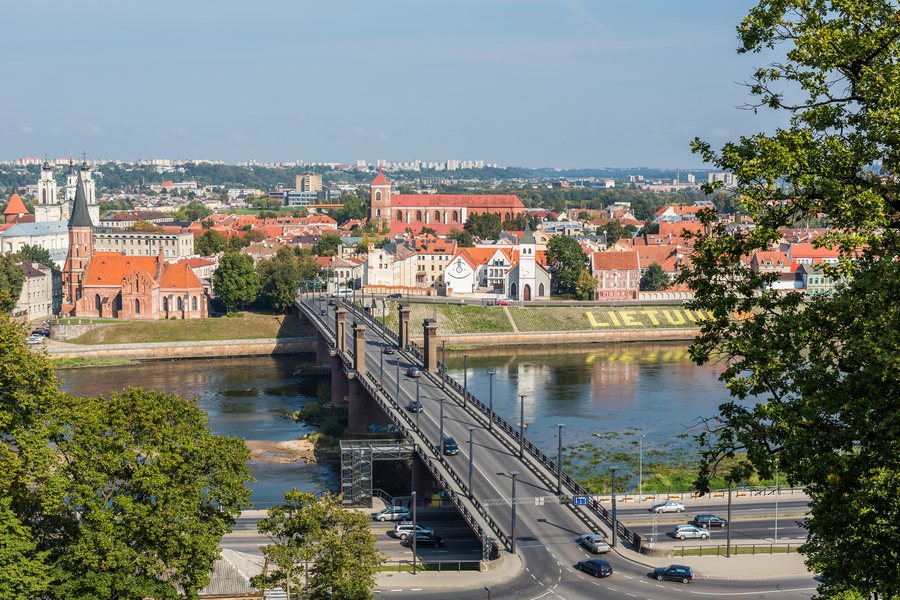 File:Vytautas the Great Bridge from hill, Kaunas, Lithuania - Diliff.jpg
Photo: Diliff via Wikimedia Commons, CC BY-SA 3.0
Key facts about Kaunas
- The World Heritage site “Modernist Kaunas: Architecture of Optimism, 1919–1939” is located in central Kaunas, in central Lithuania, at the confluence of the Nemunas and Neris rivers. It includes around 1,500 surviving administrative, public, industrial and residential buildings, including wooden buildings constructed in Kaunas between 1919 and 1939.
- Kaunas Castle, built in the mid-14th century, is the city’s oldest historical landmark. A virtual reconstruction takes visitors inside the castle as it was at the beginning of the 15th century.
- The Folk Music Museum in Kaunas presents traditional Lithuanian music through interactive exhibitions.
- Every September, the annual event “Dancing L. Zamenhofo Street” brings residents and visitors together to dance outdoors.
- Ąžuolynas Park is in Kaunas’s Žaliakalnis district; its recreational function has been preserved and is protected by law.
- The Nature Trail of Pažaislis is on the Petrašiūnai Peninsula, on the shores of the Kaunas Lagoon, and runs through the forest along the shore and slopes.
- In 1934, the route for the construction of the second funicular railway was prepared. It was intended to connect central Kaunas with Aleksotas Hill.
Modernist architecture from a formative period
The World Heritage site encompasses buildings serving a range of functions: administrative and public buildings as well as industrial and residential ones. Wooden buildings are also part of the site. This means the focus is not on just one type of building, but on a broad range of building projects from 1919 to 1939. If you are interested in urban architecture, this period provides a clear focus for exploring Kaunas.
Kaunas Castle and two historical time periods
When visiting the castle, it is worth distinguishing between the time it was built and the period it depicts: the city’s oldest historical landmark dates from the mid-14th century, while the virtual reconstruction takes visitors inside the castle as it was at the beginning of the 15th century. This connects the history of the building with a later historical moment. The reconstruction offers a distinct way to explore the castle, alongside its significance as Kaunas’s oldest historical landmark.
Lithuanian music and a September dance event
The Folk Music Museum focuses on traditional Lithuanian music and interactive exhibitions. The annual event “Dancing L. Zamenhofo Street” offers a different experience: every September, residents and visitors dance outdoors. The museum exhibitions and the event therefore differ in format: one offers an interactive exploration of music, while the other brings people together to dance. If you would like to include the event in your travel plans, check the current event dates before your trip.
Park, lagoon and historical transport planning
Ąžuolynas Park and the Nature Trail of Pažaislis offer different ways to experience nature. At the park, the focus is on its preserved, legally protected recreational function. The trail, by contrast, runs through the forest along the shores and slopes of the Kaunas Lagoon, so its landscape setting is different. These descriptions can help you choose between a park and a route through shore, slope and forest landscapes.
The history of transport in the city also has its own historical context: in 1934, the route for the construction of the second funicular railway was prepared. The planned connection was intended to link central Kaunas with Aleksotas Hill. This historical plan adds another perspective on the city’s development to the architecture and castle themes.
Discover more destinations: Vilnius, Nida, Trakai, Palanga, Druskininkai.

