
Kėdainiai: Old Town, Churches and City Park
Accommodation in Kėdainiai
Key facts
The Old Market Square in Kėdainiai was established in the 15th century as the city’s first market square. The Old Town is protected by the state as a national urban monument. The urban landscape and historic buildings are therefore among the defining themes for discovering Kėdainiai through its history.
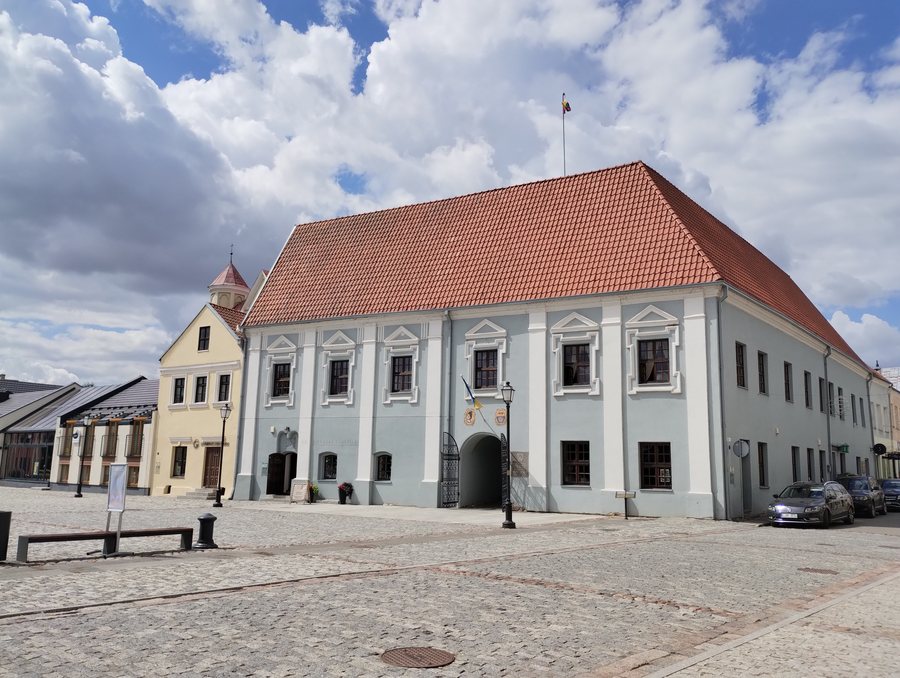
- The Old Market Square was established in the 15th century as the city’s first market square.
- The Old Town is a state-protected national urban monument.
- The synagogue complex on the Old Market Square dates from the late 18th century to the first half of the 19th century.
- The 28-metre-high minaret was built in 1880 and is Lithuania’s only freestanding minaret.
- Original 17th-century wall paintings have been preserved in the Lutheran church; the Evangelical Reformed church was completed in 1652.
- Arnet's House commemorates the Scottish community in Kėdainiai and houses a traditional crafts centre.
- The city park has paths for pedestrians and cyclists, as well as an area for inline skating and skateboarding.
Old Town and Synagogues on the Old Market Square
The synagogue complex is located on the Old Market Square and dates from the late 18th century to the first half of the 19th century. The Great Summer Synagogue was built in the 18th century, after the older synagogue was destroyed in a fire. The dates refer to different periods in the city’s history and make the complex a tangible starting point for exploring Kėdainiai’s Jewish history.
A more recent chapter in the square’s history is the opening of a Multicultural Centre in a synagogue, which took place on 16 August 2002. This is the historical opening date.
Churches, Wall Paintings and Architectural History
The single-nave Lutheran church preserves original 17th-century wall paintings. “Single-nave” describes a church with one main nave. For those interested in architecture and interior design, the clear architectural form is combined here with preserved historical paintings.
The Evangelical Reformed church in the Old Town also has a well-documented building history. Krzysztof II Radziwiłł and Anna financed its construction; their son Janusz II Radziwiłł completed it in 1652. The two churches therefore represent different aspects of the cultural heritage: the preserved wall paintings are a distinctive feature of the Lutheran church, while the patrons and completion date are recorded for the Reformed church.
Minaret, Glazier Houses and the Cityscape
The minaret is a distinctive landmark in the city’s history. The 28-metre-high structure was built in 1880 to decorate the park and commemorate the wars with Turkey. It is Lithuania’s only freestanding minaret. Of the structures built at the time, only the minaret has survived. Its height, purpose and state of preservation give it a special place among Kėdainiai’s historical landmarks.
The glazier houses also date from the 17th century and are among Kėdainiai’s landmarks. Together with the Old Market Square and religious buildings, they broaden the picture of the historic Old Town with further buildings from earlier centuries. If you are interested in urban history, you will find a range of points of interest here: squares, architecture, religious heritage and individual buildings with their own stories.
Arnet's House and Traditional Crafts
Arnet's House is an architectural monument and a tangible testament to the Scottish community that lived in Kėdainiai in the 17th and 18th centuries. The house thus connects a specific building with the history of a community in the city. The traditional crafts centre at Arnet's House offers workshops for adults, as well as for university and school students. Topics include weaving, ceramics and wood carving.
The workshops offer a different way to experience Kėdainiai than its historic buildings: instead of focusing solely on architectural history and the cityscape, you can explore practical craft techniques. The subjects range from textile crafts and ceramics to working with wood. When planning your visit, you can therefore treat cultural sightseeing and an interest in traditional crafts as separate priorities.
City Park and Outdoor Activities
Kėdainiai City Park is part of the former Kėdainiai estate. The park has paths for pedestrians and cyclists, as well as an area for inline skating and skateboarding. It offers several ways to get active, from a walk or bike ride to the two wheeled and board sports. If you would like to spend time outdoors as well as explore historical sites during your stay, the park offers a distinct option.
A guided walking tour of the Old Town offers insights into its most important historical buildings and the city’s history. When planning your visit, you can consider this guided perspective alongside your own interests in churches, the market square, houses or the park. If you would like to take the tour, confirm the booking details directly with the provider.
Discover more destinations: Kaišiadorys, Jonava, Piliuona, Altoniškiai, Šiluva, Kulautuva, Gabšiai, Ringaudai
For the broader travel overview: Kaunas County.

