
Amber in Lithuania: Origins, Museum, and Coast
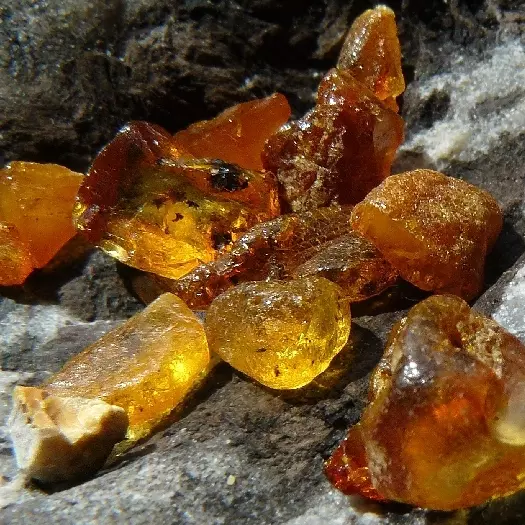 Bernstein findet man an allen Ostseeküsten, besonders in Litauen werden viele bernsteine angespült.
Photo: https://upload.wikimedia.org/wikipedia/commons/1/1c/Bernstein_auf_Granit.jpg
Bernstein findet man an allen Ostseeküsten, besonders in Litauen werden viele bernsteine angespült.
Photo: https://upload.wikimedia.org/wikipedia/commons/1/1c/Bernstein_auf_Granit.jpg
Amber in Lithuania: key facts
- Amber is fossilized tree resin; Baltic amber formed millions of years ago from the resin of prehistoric conifers.
- The Geological Survey of Lithuania dates Baltic succinite to approximately 53 to 30 million years ago.
- Amber can preserve plant and animal remains; such inclusions are among the special exhibits at the Palanga Amber Museum.
- The Palanga Amber Museum opened in 1963 and is located in the manor house of Count Feliksas Tiškevičius.
- The manor house was built in 1897 to designs by architect Franz Schwechten and is surrounded by Palanga Botanical Park.
- The exhibition explores amber’s formation and processing, as well as archaeological finds and jewelry art.
- The Baltic coast and the Curonian Spit can be linked thematically with amber, but finding a piece on the beach cannot be planned.
- When buying jewelry, ask about treatments, pressed amber, and provenance; for valuable pieces, an independent appraisal can help.
What amber is—and how old it is
Amber is not an ordinary stone, but tree resin that has hardened over geological time. Baltic amber, also known as succinite, formed from the resin of ancient conifers. The Geological Survey of Lithuania gives a broad age range of about 53 to 30 million years; some sediment layers containing especially large amounts of amber are younger than the resin formation itself. For visitors, the key takeaway is that a piece of amber tells the story of a very ancient landscape, but its precise age cannot be determined by appearance alone.
Some pieces preserve plant remains or tiny animals, while others have clear or cloudy colors with no visible inclusions. Both are normal. The rarity, size, and condition of an inclusion affect a piece’s value to collectors, but also make it more challenging to identify. The exhibition in Palanga explains how resin forms and is processed, and how it is used in jewelry and art objects.
Palanga Amber Museum: the best place to start
The Palanga Amber Museum is an engaging starting point if you want to see amber as more than a souvenir. It opened in 1963 as a branch of the Lithuanian National Museum of Art and is located in the former manor house of Count Feliksas Tiškevičius. The building was constructed in 1897 to a design by German architect Franz Schwechten; the surrounding botanical garden was designed by French landscape architect Édouard André.
The collection brings together natural history, archaeology, and crafts. You can see amber in different forms, inclusions, prehistoric finds, and jewelry from several eras. It shows that amber has played a role not only as a trade good, but also as a material for artistic creation and an archaeological find. The official museum website provides current opening hours, admission information, and visitor guidance.
Set aside dedicated time for the museum and park, and don’t plan indoor visits based on outdated opening hours. Visiting times can vary by season, so check the details shortly before your trip. For an overview to help you find your way around the promenade, beach, and town, see Palanga.
Amber and the Baltic coast: plan a route, not a guaranteed find
Lithuania’s coast is closely associated with amber crafts and the trade in finds from the Baltic Sea. That does not mean you can always find pieces on the beach: wind, waves, and weather affect what washes ashore. Plan a coastal walk as a nature experience, not as a sure way to find a souvenir. In dunes and protected areas, follow the designated rules; do not take anything if signs or conservation regulations prohibit it.
If your trip takes in several coastal towns, pair the museum exhibition with a look at the region’s varied landscapes. Klaipėda offers an urban base on the coast, while Neringa takes you onto the Curonian Spit. Learn more about this natural environment in the article on the Curonian Spit. You can also include the Curonian Lagoon and Lithuania’s Baltic beaches in a longer route. These places complement the amber theme, but are no substitute for a dedicated museum visit.
Buying amber jewelry: questions worth asking
Color is not the only thing that matters in a piece of jewelry. Ask whether it is natural, treated, pressed, or reconstructed material, and for a larger purchase, have this information put in writing on the receipt or product description. Pressed amber is made by combining smaller pieces under pressure and heat; treatments can change its color and transparency. That is not automatically a reason to reject a piece—the important thing is that the material and processing are clearly described and match the price.
Be especially cautious about insect inclusions that look flawless: an impressive appearance alone does not prove authenticity. For an expensive purchase, the Gemological Institute of America recommends an independent laboratory report. If in doubt, ask for traceable information about the piece’s origin and keep the receipt and product description. A reputable seller should be able to answer questions about the material and any treatments clearly.
The same principles apply to inexpensive souvenirs, with an appropriate level of scrutiny: decide whether you want a decorative piece or a particular natural material, compare product descriptions, and don’t let an alleged “beach find” pressure you into a quick purchase. For more ideas for locally made crafts, see the overview of souvenirs from Lithuania.
A day in Palanga and longer coastal trips
For a short stay, a simple itinerary works well: start at the Amber Museum, then take time to explore the Botanical Park, and later head toward the town center or coast. Check in advance that the museum and any indoor spaces you want to visit will be open on your chosen date. If you want to visit several collections, the nationwide overview of museums in Lithuania can help you narrow down your choices by location and interest.
On a longer trip, you can combine Palanga with Klaipėda, Neringa, and smaller coastal towns. Šventoji is another stop along the coast; plan your travel and beach visit around the weather and season. Amber provides a connecting thread through museums, crafts, and landscapes—but it does not promise a particular find or shopping experience.
Caring for and storing amber
Amber is organic in origin and more delicate than many gemstones. High heat can damage it, while prolonged exposure to bright light can alter its color. Avoid placing jewelry on radiators or electronic devices, and keep it out of direct sunlight for extended periods. For pieces with significant collector or sentimental value, seek expert advice on care and storage.
Frequently asked questions about amber in Lithuania
What is Baltic amber made of?
It is fossilized resin from prehistoric conifers that changed and hardened over millions of years. According to geological data, Baltic succinite formed over a long period during the Paleogene.
Where is the best place to learn about amber in Lithuania?
The Palanga Amber Museum brings together natural history, inclusions, archaeological finds, and jewelry art. The exhibition is housed in a historic manor house surrounded by the Botanical Park.
How old is Baltic amber?
The Geological Survey of Lithuania dates Baltic succinite to about 53 to 30 million years ago. You cannot determine the exact age of an individual piece of jewelry from this range alone.
Can I find amber on the beach?
Pieces sometimes wash ashore, but the amount and timing depend on conditions. Don’t plan on a guaranteed find, and follow the rules and signs in protected areas.
How can I tell if amber is genuine?
Visual inspection cannot guarantee authenticity, especially for pieces with inclusions or that have been treated. Ask for written information about the material; for a significant purchase, an independent appraisal is advisable.
How should I store amber jewelry?
Protect it from high heat, prolonged direct sunlight, and scratches. For valuable or antique pieces, consult a specialist about cleaning and care.
