
Kupiškis: Museum, Musical Fountain and Street Art
Accommodation in Kupiškis
Quick facts
The Kupiškis Museum brings together architectural and everyday history: it is located in a former parish school dating from 1823. Its permanent exhibitions focus on peasant households in the late 19th and early 20th centuries, as well as Kupiškis wedding traditions. Everyday life and wedding customs therefore offer distinct perspectives on local culture.
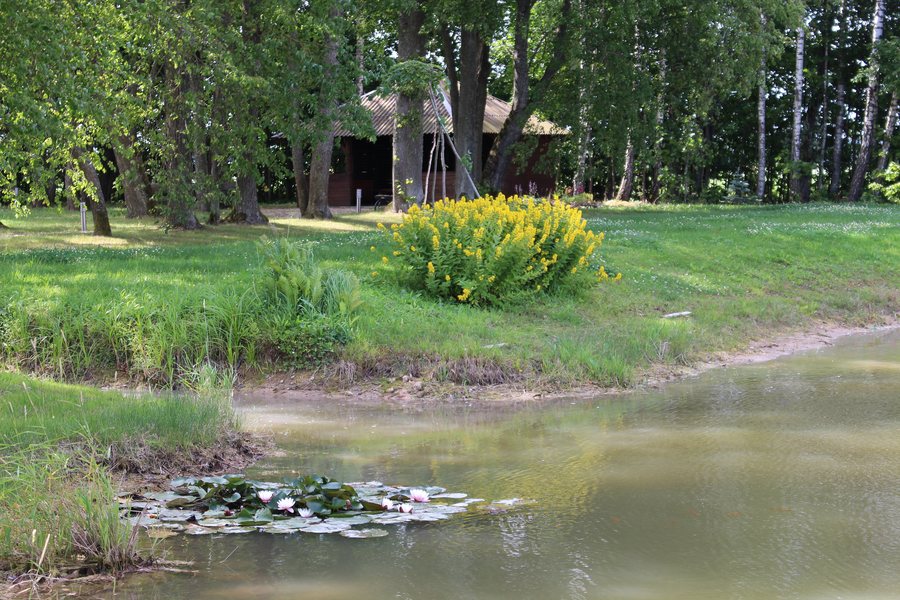 File:Topolis (Kupiškis), pavėsinė.JPG
Photo: The original uploader was Ed1974LT at Lithuanian Wikipedia . via Source, CC0
- The Kupiškis Museum is housed in a former parish school building dating from 1823.
- Its permanent exhibitions are devoted to peasant households and Kupiškis wedding traditions.
- The musical fountain in Laurynas Gucevičius Square combines water, light and music; during performances, its jets reach up to eight metres high.
- Since 1950, the Kupiškis Public Library has been housed in a former Jewish synagogue.
- A permanent exhibition on Ritinis displays awards and other exhibits.
- Street art includes “Kupiškėnai wedding” and “Rainbow horse” by Henrikas Orakauskas.
- A seasonal activity invites visitors to play Ripka together with Vidmantas Liubomirskas.
Cultural history and art in Kupiškis
The museum’s collection also includes traditional Lithuanian clothing and accessories from the 19th century through the first half of the 20th century, assembled by Stefanija, Mikalina and Elvyra Glemžaitė. It also preserves aurochs horns nearly 4,000 years old, considered the largest found in Lithuania. These collection items complement the permanent exhibitions with themes of clothing, crafts and natural history reaching far back in time.
Since 1950, a former Jewish synagogue has served as the Kupiškis Public Library. It preserves materials on local history, manuscripts and photographs. If you plan a visit specifically to the library, check the latest service information beforehand.
Street art is also part of the townscape: Henrikas Orakauskas created “Kupiškėnai wedding” and “Rainbow horse.” The titles highlight different themes—wedding traditions and a rainbow horse. At the Stone Sculpture Park of Vytautas Jasinskas, the owner invites visitors to view the sculptures in his yard. As access depends on an invitation, please arrange your visit in advance.
Musical fountain and Ritinis
The musical fountain in Laurynas Gucevičius Square combines water, light and music. During a performance, its jets reach up to eight metres high. The fountain was built in 2019 when the square was redesigned, replacing the former fountain. As operating times and programmes may vary, check for current performances before planning a visit specifically for one.
At the Kupiškis District Physical Education and Sports Center, a permanent exhibition on Ritinis, a Lithuanian ring game, displays awards and other exhibits. Visits are intended for weekdays; weekend visits can be arranged in advance. Check the latest access information beforehand. The seasonal Ripka activity is separate: it involves playing together with Vidmantas Liubomirskas, president of the Kupiškis Ritinis Sports Club and an educator. Check in advance whether the summer activity is currently available.
Nature and cultural heritage in the wider destination of Kupiškio rajono savivaldybė
The Kupiškis Reservoir was created in 1984, after the Lėvuo River was dammed. The artificial reservoir covers 828 hectares and is about 25 kilometres long. Events held there each year include the Kupiškis Reservoir Regatta, international powerboat racing, Lithuanian and international triathlon competitions, and the Lithuanian beach soccer championship. Ice-fishing competitions and summer festivals are also held there. If you are travelling for a particular event, check the dates in advance.
The dendrological park on Uošvės Liežuvis Island covers 8.97 hectares and is home to more than 50 tree species. The island can be reached via a bridge from the village of Pajuodupė or by a pontoon bridge from the Aukštupėnai recreation area. The park has educational trails, recreation areas with shelters, toilets and an event area. A 225-metre wakeboard course with ramps runs between the Aukštupėnai recreation area and the island; check its current operating status before using it.
The “Į girią” educational trail in Šimonys Forest is about 1.4 kilometres long and has shelters, a fire pit, benches, information boards and educational games for children. It borders the Iženas telmological reserve. Check the reserve boundaries and seasonal rules before planning your visit. Animals in the forest include moose, roe deer, wild boar, foxes, hares and wolves; protected species include the black stork and lesser spotted eagle. Wildlife sightings are not guaranteed.
The Kupiškis, or Aukštupėnai, hillfort lies just outside Kupiškis on the left bank of the Lėvuo River, near the Kupiškis Reservoir and the village of Aukštupėnai. Historians believe that a wooden community castle or refuge may have stood there, and that this was where the later town first began. This historical interpretation is explicitly a hypothesis.
Other cultural sites in the wider destination offer their own highlights: Adomynė Manor is a rare monument of Romantic-Classicist wooden architecture and is listed in Lithuania’s Register of Cultural Heritage. Features that have been preserved include tiled stoves, a bread oven, frescoes, decorated doors with metal fittings and ornamental parquet floors. Palėvenė Church has eight altars and is considered one of the most original examples of so-called folk Baroque in Lithuania. The history of the Dominican monastery there dates back to 1676, when the first Dominican monks settled there.
At the restored monastery granary in Palėvenė, visitors can sample monks’ dishes and homemade beer from the Kupiškis region. If you plan to take part in this tasting, confirm its current availability in advance.
Discover more destinations: Šilagalys, Naujamiestis, Panevėžys, Puožas, Krekenavos Seniūnija, Kučiai, Rokiškis, Kazliškio Seniūnija.
See the wider travel guide: Panevėžys County.

