
Milašaičiai: Wooden Church and Local History
Accommodation in Milašaičiai
Key facts
The Church of the Crucified Jesus is a specific cultural landmark in Milašaičiai. Its history can be traced through two dates: in 1786, Januška-Januškevičius had the first wooden chapel built; in 1855, the church was built. The dates therefore mark different construction phases—first the chapel, then the church. There are 69 years between them. Anyone interested in how a place developed will find a clear timeline here, one that reaches beyond the history of a single building.
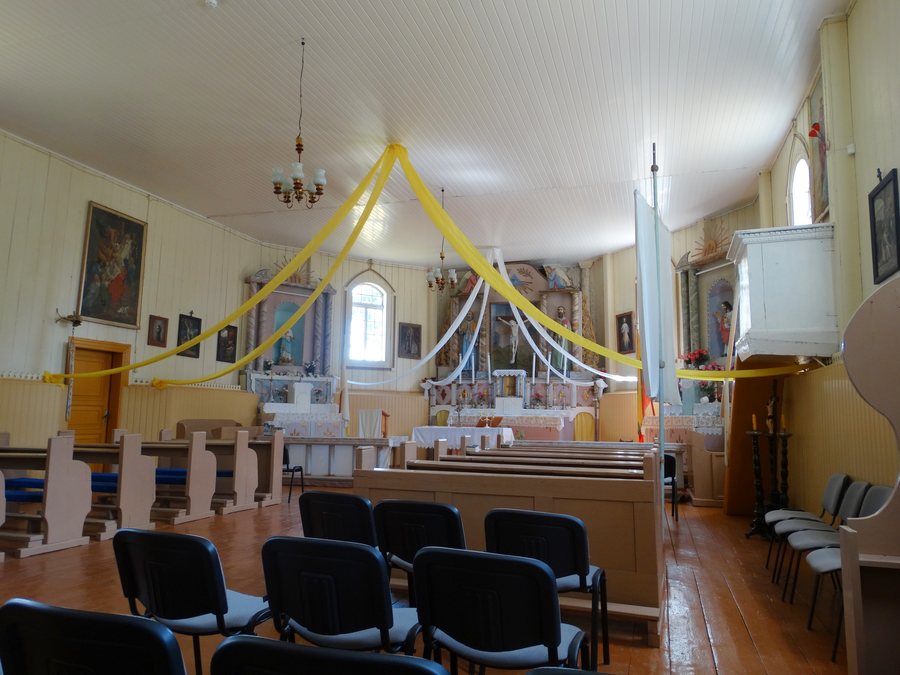
- The Church of the Crucified Jesus stands in Milašaičiai and was built in 1855.
- The wooden church features folk architecture, a rectangular floor plan, and two small towers.
- Januška-Januškevičius had the first wooden chapel in Milašaičiai built in 1786.
- A branch of the Raseinių Marcelijaus Martinaičio Public Library is located in Milašaičiai.
- The traditional community kayak trip took place for the tenth time in 2019; the Milašaičiai–Ariogala route was chosen for that edition.
The Wooden Church and Its Construction History
The building’s form can also be described in specific terms. The church is made of wood and has a rectangular floor plan, along with two small towers. A floor plan shows the shape of a building when viewed from above. This makes it possible to distinguish the rectangular layout from the smaller details that rise above it. The features of folk architecture add a stylistic classification to this description. When exploring the building, you can therefore consider its materials, basic shape, and towers as three distinct aspects rather than describing it only generally as a wooden church.
The term “folk architecture” draws attention to a building style associated with inherited regional building traditions. Together with the rectangular floor plan, it offers a simple way to picture the structure: first the basic shape, then the smaller towers, and finally its architectural classification. This perspective is particularly useful if, on a trip to Lithuania, you want to do more than collect dates and also pay attention to how materials and form shape the character of a historic building.
Local Connections and Trip Planning
Alongside the construction history, there is another point of interest tied to a specific time. In 2019, the traditional community kayak trip took place for the tenth time. The Milašaičiai–Ariogala route was chosen for that edition. This is a different kind of local history from that of the church: here, the focus is on a specific community activity and a particular edition, while the church’s history centers on construction phases dated 1786 and 1855. When organizing your travel interests, these offer two distinct perspectives: historic architecture and a community outing.
A branch of the Raseinių Marcelijaus Martinaičio Public Library is also useful for orientation. Its address is Šventupio g. 3, Ariogalos sen., Raseinių r. sav., 60231. The full address helps you identify this exact location; you can leave the Lithuanian place and administrative names unchanged if needed.
If you are considering Milašaičiai as a possible place to stay, you can first think about which of these connections matters more to your trip: local construction history or an interest in community activities. Take this into account when choosing accommodation and compare it with the other stops you plan to make on your trip to Lithuania.
Discover more destinations: Viduklė, Nemakščių seniūnija, Raseiniai
Return to the main travel overview: Raseiniai District Municipality.

